Oh yes it is! The festive season is almost upon us, and few traditions bring a community together quite like a Christmas show, with grandparents booing the villain, children shouting “He’s behind you!” and a leading lady in a frock that defies the laws of physics. If you’re wondering how to put on a pantomime, whether you’re an amateur dramatic society, a school, a village committee or a small theatre, this guide is for you.
We’ll cover what makes the format so special, then walk you through eight practical steps: from choosing a script and finding your performers to sorting the paperwork, selling tickets and filling every seat on the night.
Summary
What is a pantomime?
It’s a family musical comedy staged around Christmas and New Year, usually based on a well-known fairy tale or folk story. Its roots go back to the Italian commedia dell’arte and the Harlequinades of 18th-century London, before the Victorians turned it into the festive family entertainment we know today.
Whatever the story, the British version tends to include:
- A dame, traditionally played by a man, and a principal boy, traditionally played by a young woman
- A villain the audience loves to hiss at, and a good fairy who arrives in a puff of smoke
- Audience participation: “Oh no it isn’t!”, “He’s behind you!” and the inevitable sing-along
- Slapstick laughs, groan-worthy puns and topical local jokes
- Bright outfits, songs and dance numbers, often borrowing from current chart hits
Panto season usually runs from late November to mid-January, with peak demand in the fortnight before Christmas. For organisers, that means a short, intense sales window, and a real opportunity: for many families, the annual trip to the theatre is as much a part of Christmas as the tree. Get it right and you’ll have a loyal audience for years to come.
How to put on a pantomime: step-by-step guide
1. Build your team and set your goals
Even the smallest production needs more people than you think. Before anything else, pull together a core committee and agree why you’re staging the show: raising money for a local charity, funding your society’s next production, or simply giving the village a good night out. Your goal will shape everything from ticket prices to venue size.
Key roles to fill early:
- Producer: keeps the budget, timeline and decisions on track
- Director: leads casting, the creative vision and the weekly sessions
- Musical director and choreographer: songs, band or backing tracks, and dance routines
- Stage manager and tech crew: set, lighting, sound and scene changes
- Front of house and box office lead: ticketing, ushers, refreshments and the raffle
If you’re raising money for a cause, our guide on how to organise a charity event has plenty of ideas that apply here too.
2. Choose your pantomime script
The classics sell themselves: Cinderella, Aladdin, Jack and the Beanstalk, Dick Whittington, Snow White, Beauty and the Beast and Mother Goose. Choose a title your audience will recognise instantly, then ask three practical questions:
- Company size: does the script suit the number of performers you have?
- Running time: around two hours including an interval suits most family audiences
- Staging demands: a beanstalk that grows is wonderful, but only if your crew can build it
You can write your own (and add plenty of local in-jokes), or use a published one. Organisations such as NODA and specialist publishers offer scripts written for community groups. Published scripts come with performing rights and royalties, usually based on the number of performances and seats, so apply in good time and factor the cost into your budget.
3. Book your venue and dates
Village and school halls, churches, community centres and amateur theatres all make great venues. When comparing options, check:
- Capacity and seating layout, including whether seats are fixed or can be rearranged
- Stage, wings and backstage space for quick changes
- Lighting rig, sound system and power supply
- Accessibility: step-free access, accessible toilets and space for wheelchair users
- Get-in time at the venue before opening night
As for dates, book early: popular spaces fill up fast for December. Weekend matinées are ideal for families with young children, while evening shows suit adult groups. Many community groups run their show in late January or February too, when venues are cheaper and audiences are hungry for something to do.
4. Set a budget and sort your paperwork
A realistic budget is the difference between a joyful show and a nervous treasurer. Typical costs include venue hire, script royalties, wardrobe and wigs, set and props, lighting and sound hire, printing, insurance and ticketing fees. On the income side, think beyond ticket sales: refreshments, programmes, a raffle, sponsorship from local businesses and adverts in the programme all add up. Our guide to creating an event budget will help you build it line by line.
Then tick off the paperwork:
- Performing rights: secured from the publisher before work begins
- Venue permissions: in England and Wales, a play put on between 8am and 11pm for an audience of 500 or fewer doesn’t normally need council approval for the performance itself, but selling alcohol does. Check with your venue and your local council
- Music rights: if you use recorded or live music beyond the script, check whether the venue’s PPL PRS cover includes it
- Public liability insurance: check what the venue covers and what you need yourself
- Safeguarding: if children are performing, you’ll need chaperones and, depending on your circumstances, permission from the local authority
- Risk assessment: pyrotechnics, smoke machines and haze need particular care

5. Hold auditions and build the show
Hold open calls to cast your show and be clear about the time commitment from day one. Most community groups rehearse for 10 to 12 weeks, usually two evenings a week, building up to a technical run and at least one full dress rehearsal at the venue.
The pantomime dame is the heart of the show, so choose someone with confidence, comic timing and a thick skin. Don’t forget the chorus and junior performers: every child in the cast brings parents, grandparents and siblings into the audience.
Meanwhile, your crew can get on with the set, wardrobe and props. Hire costumes from a theatrical supplier if your budget allows, or call on the sewing skills of your community. Need inspiration for the look and feel? Our event theme ideas might spark something.
6. Set up your ticketing
The days of a cash tin and a book of raffle tickets are numbered. Selling tickets online means families can book whenever suits them (often late in the evening, once the children are in bed), you know exactly how many seats are left, and the money arrives before the curtain goes up.
With WeezTicket, our online ticketing solution, you can create a ticket shop for your show in minutes and share it on your website and social media. A few features that work particularly well:
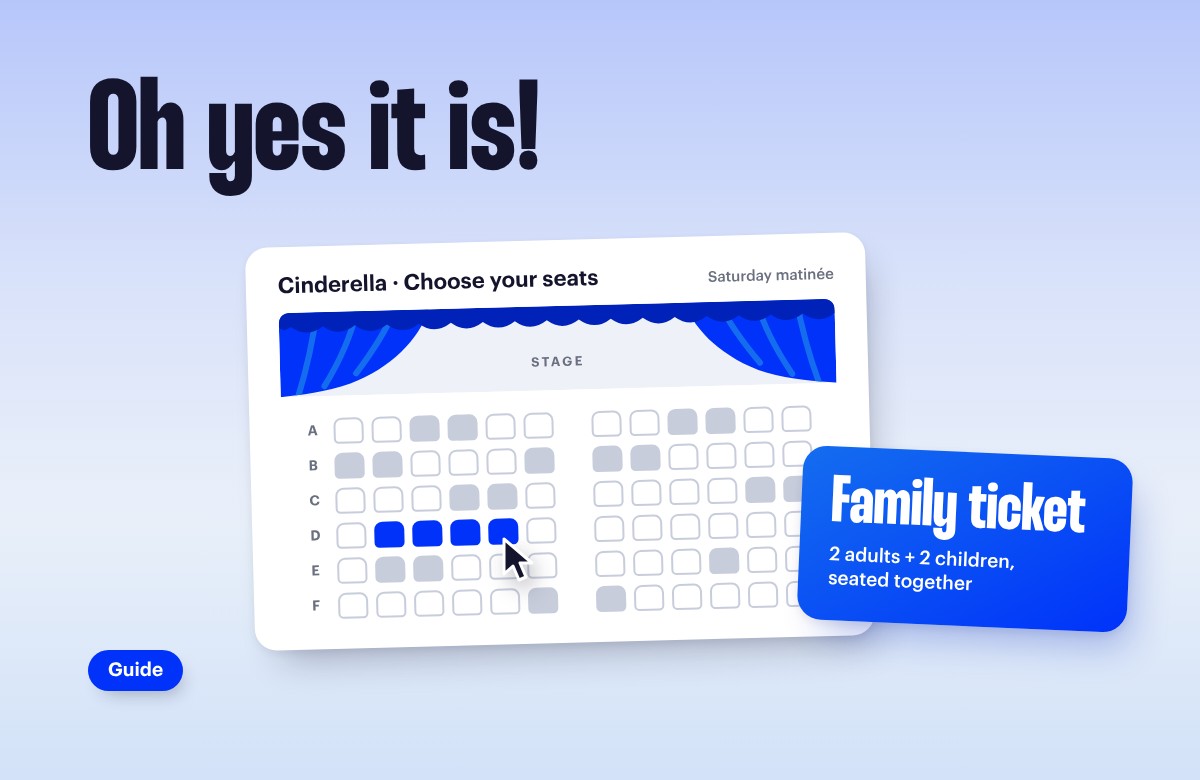
- Allocated seating: let families choose seats together. Allocated seating is especially useful for groups and sell-out performances
- Several ticket types: adult, child, concession, family tickets (two adults and two children) and group rates. See our guide to event ticket types for inspiration
- Add-ons: sell programmes, interval ice cream or a raffle strip alongside the ticket
- Multiple performances: manage every matinée and evening show from a single dashboard
- Complimentary tickets: send online invitations to sponsors, chaperones and local press
On the night, keep a few seats back for walk-ups and use on-site ticket sales so your box office volunteers can sell the last tickets in seconds.
Pricing tip: look at what other local pantos charge and price slightly below the big regional venues. Family tickets and early bird prices encourage people to book early, which helps your cash flow and shows you which performances need a push.
7. Promote your show locally and online
Your audience will be overwhelmingly local, so your promotion should be too. Start selling at least eight to ten weeks before opening night, when families start planning their Christmas diaries.
- Social media: behind-the-scenes clips, outfit reveals and the leading lady’s first make-up test all perform brilliantly on Facebook and Instagram
- Schools and Scouts groups: offer group rates and a few free tickets for a school raffle; children are your best ambassadors
- Local press and radio: send a press release with a strong photo of your performers in character
- Posters and flyers: shops, libraries, GP surgeries, pubs and community noticeboards
- An event page: give people one place to find dates, prices and the booking link. You can create an event website in a few clicks
- Email: reach last year’s audience first. Our article on what to do with attendee data after your event explains how to make the most of it
For a full plan, see our guide to creating an event communication plan.
8. Run a smooth show day, then review
When families arrive with excited children in tow, nobody wants to queue in the cold. Scanning e-tickets at the door with the free WeezAccess access control app gets everyone to their seats quickly and gives you a live headcount, which is essential for fire safety.
A few more show-day essentials:
- Front of house rota: ushers, box office, refreshments and raffle sellers, all briefed on timings. Tools for volunteer planning take the headache out of filling every slot
- Card payments at the bar: speed up interval queues for drinks, sweets and glow sticks with event POS systems
- Accessibility: consider a relaxed performance with lower sound levels and house lights left on, and make sure accessible seating is easy to book
- A warm welcome: a performer in character greeting families in the foyer costs nothing and makes the evening
Once the final curtain falls, review while it’s fresh. Compare ticket sales by performance, ask your audience for feedback by email, and note what to change next year. A short survey, a thank-you message and an early-bird offer for next season keep people coming back, year after year.
Oh yes you can!
Now you know how to put on a pantomime, all that’s left is to find your leading lady, dust off the glitter and start selling tickets. With a clear plan, a committed team and simple online ticketing, your panto can become the highlight of your community’s Christmas calendar.
Looking for more inspiration? Read our guides on how to organise a cultural event and how to organise a concert in 8 steps, or explore our solutions for concerts and shows.
Talk to our team about your show
FAQ
Q: How long does it take to put on a pantomime?
Most groups start planning six to nine months ahead. Choosing a script and booking a venue usually happens in spring or early summer, auditions in September, and the company meets weekly for around three months before a December opening.
Q: Do you need a licence to put on a show?
If you use a published script, you’ll need permission from the rights holder. In England and Wales, a play put on between 8am and 11pm for 500 people or fewer doesn’t usually need council approval for the performance itself, but selling alcohol does. Always check with your venue and local council.
Q: How much should tickets cost?
Community productions typically charge less than professional regional theatres. Offer child, concession and family tickets, and consider early bird prices to encourage people to book ahead.
Q: When is the Christmas show season in the UK?
It usually runs from late November to mid-January, with demand peaking in the two weeks before Christmas. Many local groups also stage their show in January or February, when venues are easier to book.
Q: What are the most popular pantomimes?
Cinderella, Aladdin, Jack and the Beanstalk, Snow White, Dick Whittington, Beauty and the Beast and Peter Pan are perennial favourites, because audiences know the stories and come for the jokes.
Q: How do I sell more tickets?
Start selling early, offer family and group tickets, target local schools and community groups, share behind-the-scenes content on social media, and make booking easy with an online ticket shop that works on mobile.