Papal visit to France
Papal visit to France: a tailored set-up for a historic visit
From 25 to 28 September 2026, Pope Leo XIV visited France, from the Stade de France to Lourdes by way of the Place de la Concorde and Metz. Over four days, young people from all over France, dioceses, media, volunteers, liturgical services and cardinals came together for gatherings, masses and moments of prayer.

- 1 million registrations
- 70,000 accreditations issued
- 80 team members deployed
No two stages worked the same way. Organisers changed from city to city, capacities varied widely, movement rules were specific to each site and every badge remained subject to heightened security measures.
Three challenges accounted for most of the complexity:
- Accreditation: 70,000 people to be cleared by the authorities before any badge could be issued, while absorbing peaks at the collection centres.
- Registration: several hundred thousand places to allocate between the general public and reserved allocations, without losing control of capacity.
- Access control: tickets to be made compatible with the Stade de France’s infrastructure, while adapting control rules to the other sites.
For several days, our teams danced to the rhythm of an event of rare scale, making sure each of these strands worked with no plan B.
1. 70,000 accreditations subject to security vetting
A volunteer in Lourdes, a journalist accredited to the Vatican and a member of the liturgical services don’t have the same information to provide, the same journey or the same access rights. With 70,000 people to accredit, the challenge was to centralise management while keeping separate scopes for each audience and organiser.
With WeezCrew, we set up 19 projects. Organisers could only access the profiles relating to their own events, while relying on a single system to collect information, track approvals and produce accreditations.
Vetting drives everything. We created a form for each group – volunteers, staff, production, media and liturgy – to collect the exact information required by the authorities according to role, site and journey. Once checks were complete, each profile’s status was updated in WeezCrew. Only approved profiles received their personal voucher with a QR code, which they needed in order to collect their badge.
The collection centres then had to absorb peaks in demand. Tens of thousands of badges were handed out in just a few days without slowing the pace. To handle these volumes, 6 centres were equipped with 40 dedicated stations, each with a computer, a printer and a mobile scanner.
The accredited person presented their voucher, scanning the QR code that brings up their profile directly in WeezCrew. The operator could then print their personalised, tear-proof A6 badge.
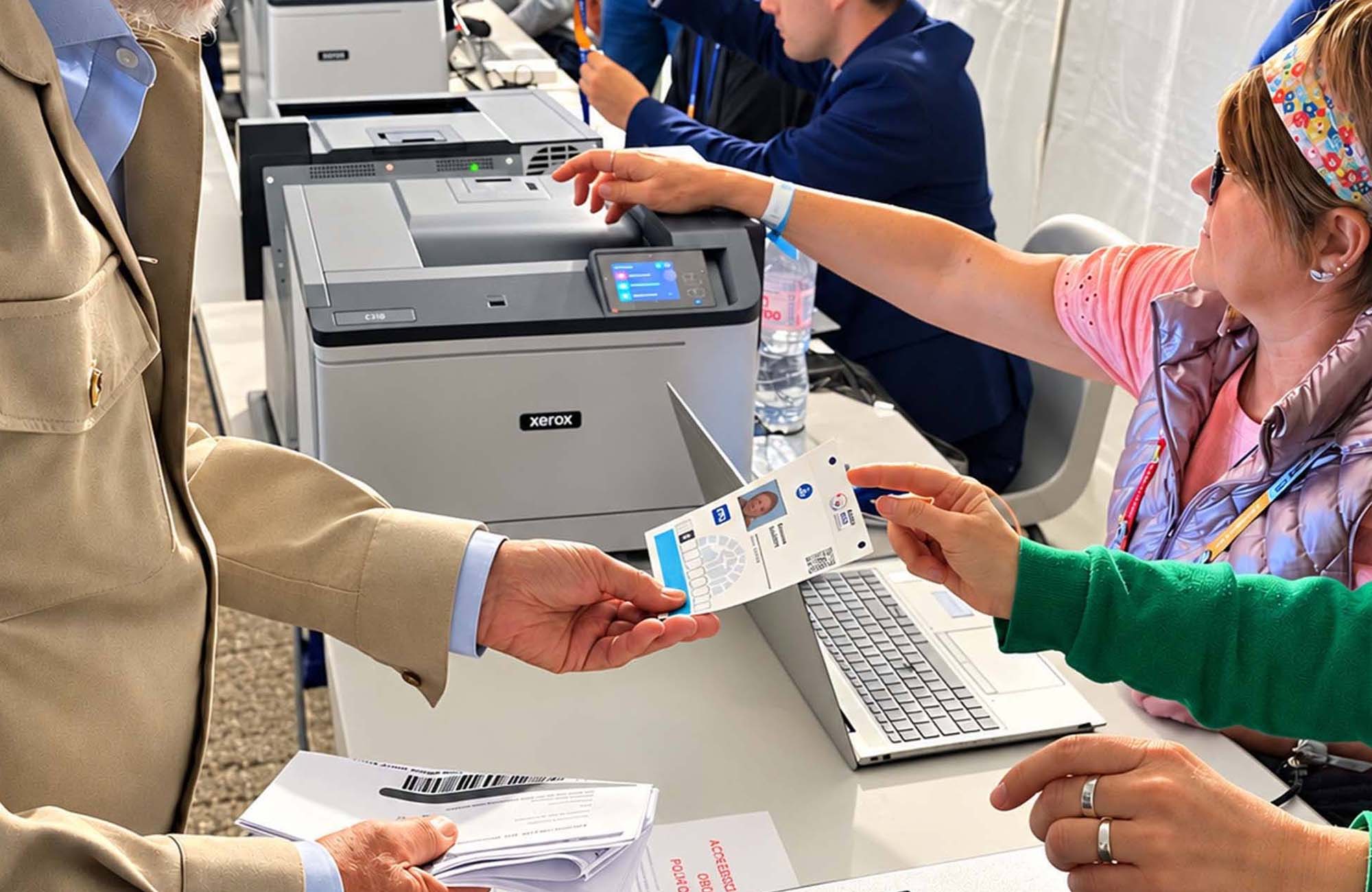
Each station was packed as a kit, making it easy to move and redeploy. If footfall rose at one centre, our teams could quickly transfer some of the equipment from another site to boost its printing capacity.
Some badges were also prepared in advance. More than 200 media accreditations were printed at our Paris offices before being sent to the Vatican.
Once accreditation was issued, each profile received permissions and rights according to the city, the site, the role and the area the person needed to access.
This information was linked directly to profiles in WeezCrew, then reflected on the accreditation itself. Organisers could set default rights by profile type, then adjust them individually where needed. A single badge could, for example, allow its holder to work in both Paris and Lourdes, while restricting access to certain areas in each city.
The same logic applied to kit allocations. In Paris, volunteers had items linked to their profile, such as a T-shirt and a cap, with their size collected at registration. Kit collection was logged in a list shared across the Paris centres: if an item had already been handed out, any new scan showed up in red and blocked a second issue. The same principle applied to badges: every badge was logged, so the exact number of accreditations issued per centre was known, avoiding duplicates.
2. Open to all, while protecting reserved places
Depending on the event, several hundred thousand places had to be allocated according to different rules. Some were open to the general public, others reserved for dioceses or groups, with one shared requirement: knowing at all times what was already allocated, what was still available and who was actually expected.
WeezTicket allowed these different journeys to coexist within a single system.
Public registration had to absorb peaks. Attendees registered directly via a website built specifically for the visit. When registration opened for the Stade de France, a virtual queue regulated access to ticketing, absorbing demand without compromising the registration experience.
Allocations had to remain guaranteed without freezing capacity. Some places were reserved for dioceses and other groups through 2 mechanisms: member codes with a set number of uses, which allowed each person to register without exceeding the allocated quota, and a partner platform where group leads could add their guests, individually or by bulk import, then track in real time the places allocated, those remaining and their breakdown by zone.
In Metz, any allocations not used by the deadline could then be released to the general public.
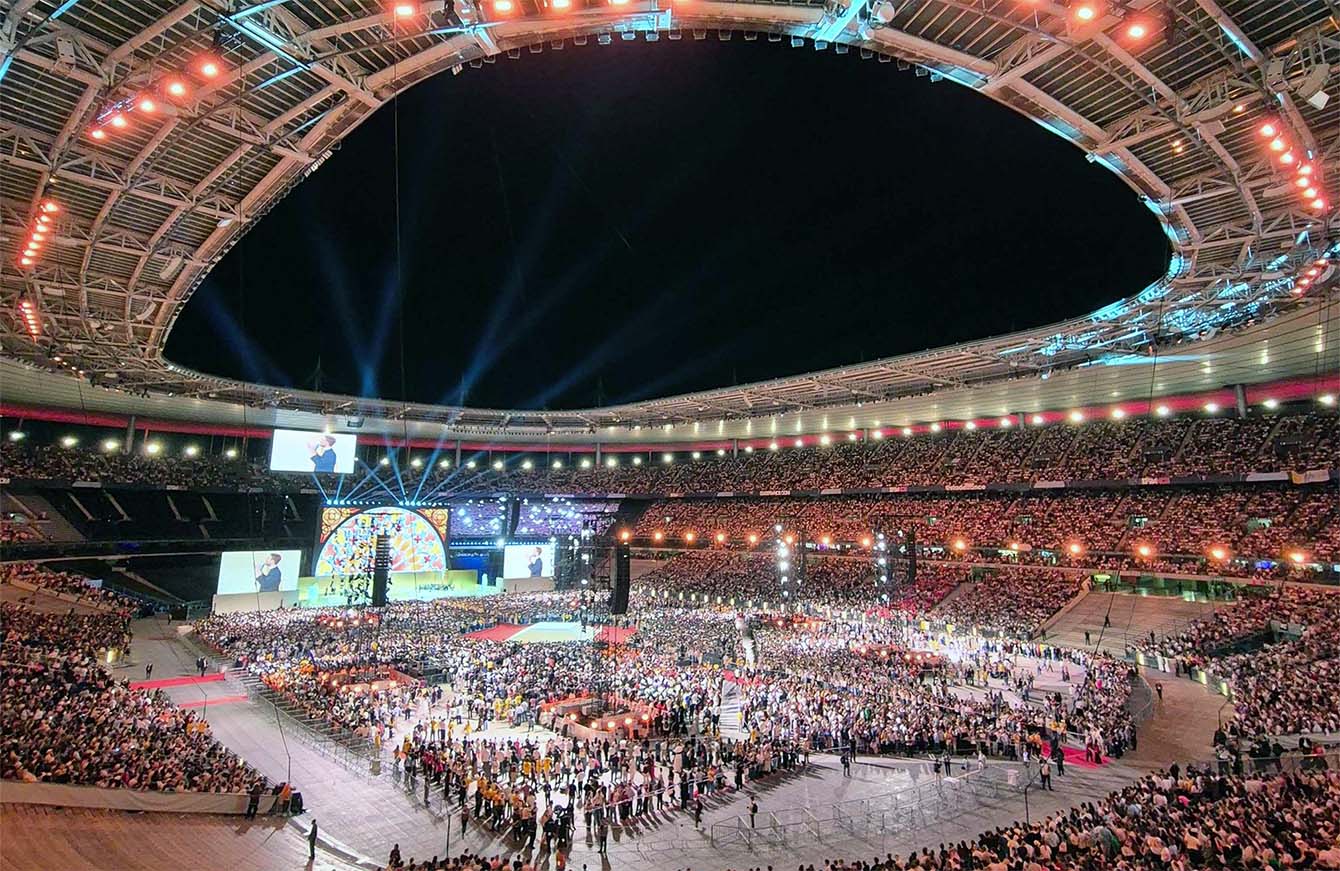
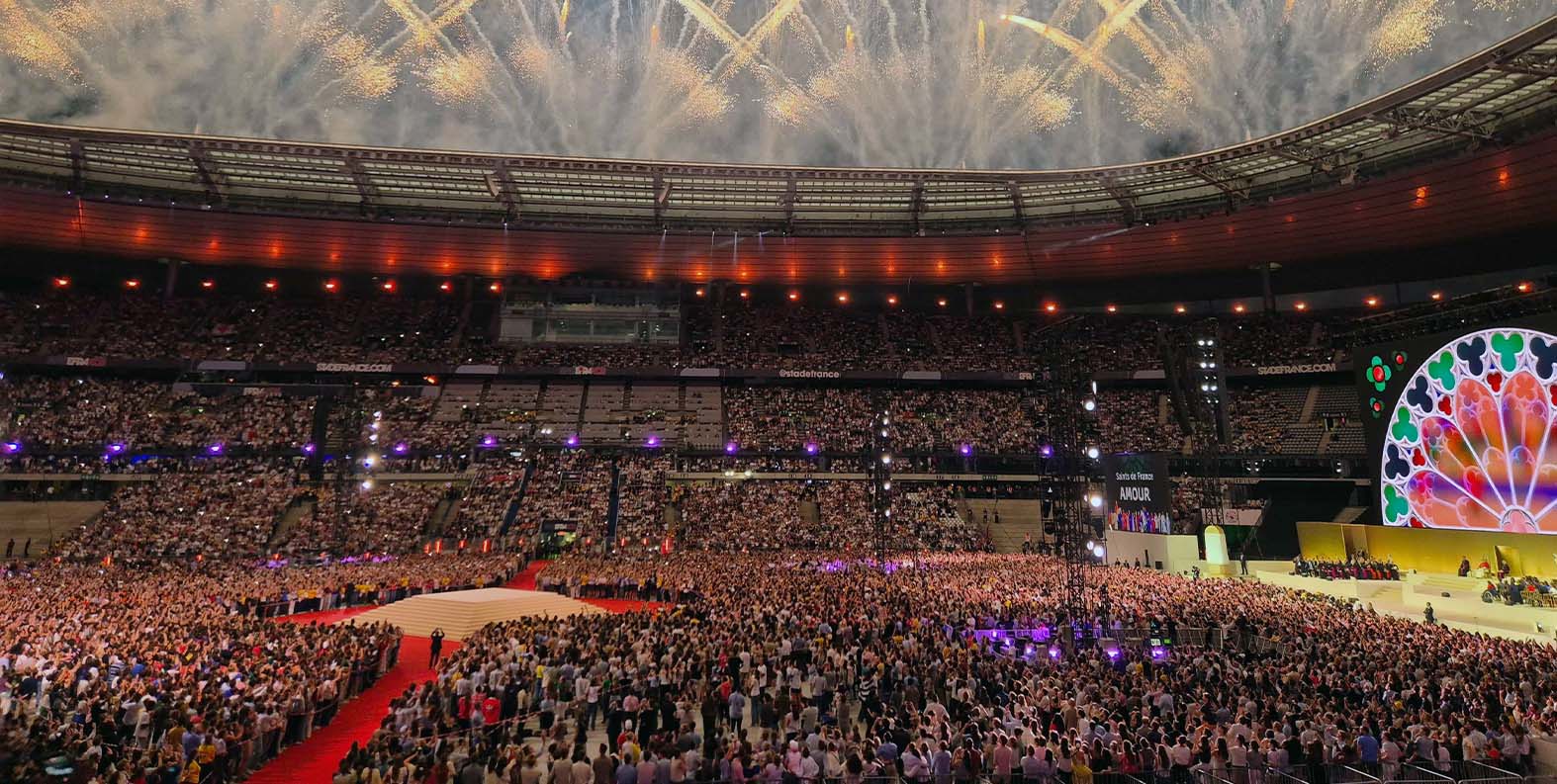
Ticket allocation shaped crowd flow on the day. At the Stade de France, all 80,000 seats were mapped so that every attendee could be assigned a seat. The information provided in the registration form also made it possible to seat people from the same diocese or group together wherever possible.
At the Concorde, attendees were spread across several blocks and zones, from A to F, split into north and south. Each ticket linked its holder to a specific area, so they could be directed to the right entrance as soon as they arrived, better distributing crowd flows across the site. .
A reserved place should never become an empty seat. At the Stade de France, where every attendee had a numbered seat, free registration increased the risk of no-shows between booking and the day itself. To narrow the gap between theoretical capacity and the number of people actually expected, a customer account allowed attendees to update their details, cancel their attendance to free up their place, or transfer a named ticket directly to a companion to make entry smoother.
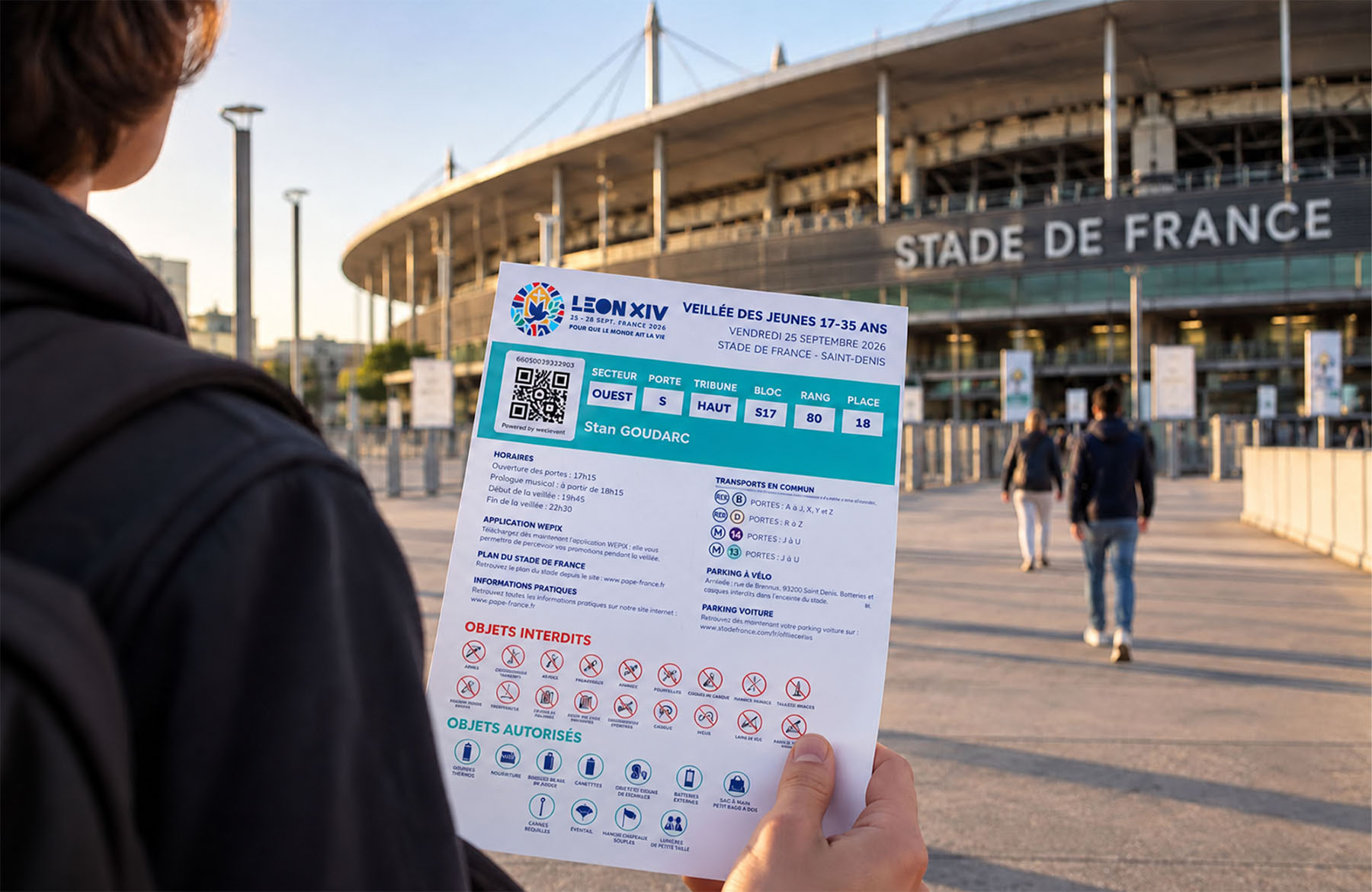
3. Access control that adapted to each site
The Stade de France, Lourdes and Metz share neither the same infrastructure nor the same movement rules. Access control therefore had to integrate with existing systems where they were already in place, while remaining flexible enough to meet very different needs elsewhere.
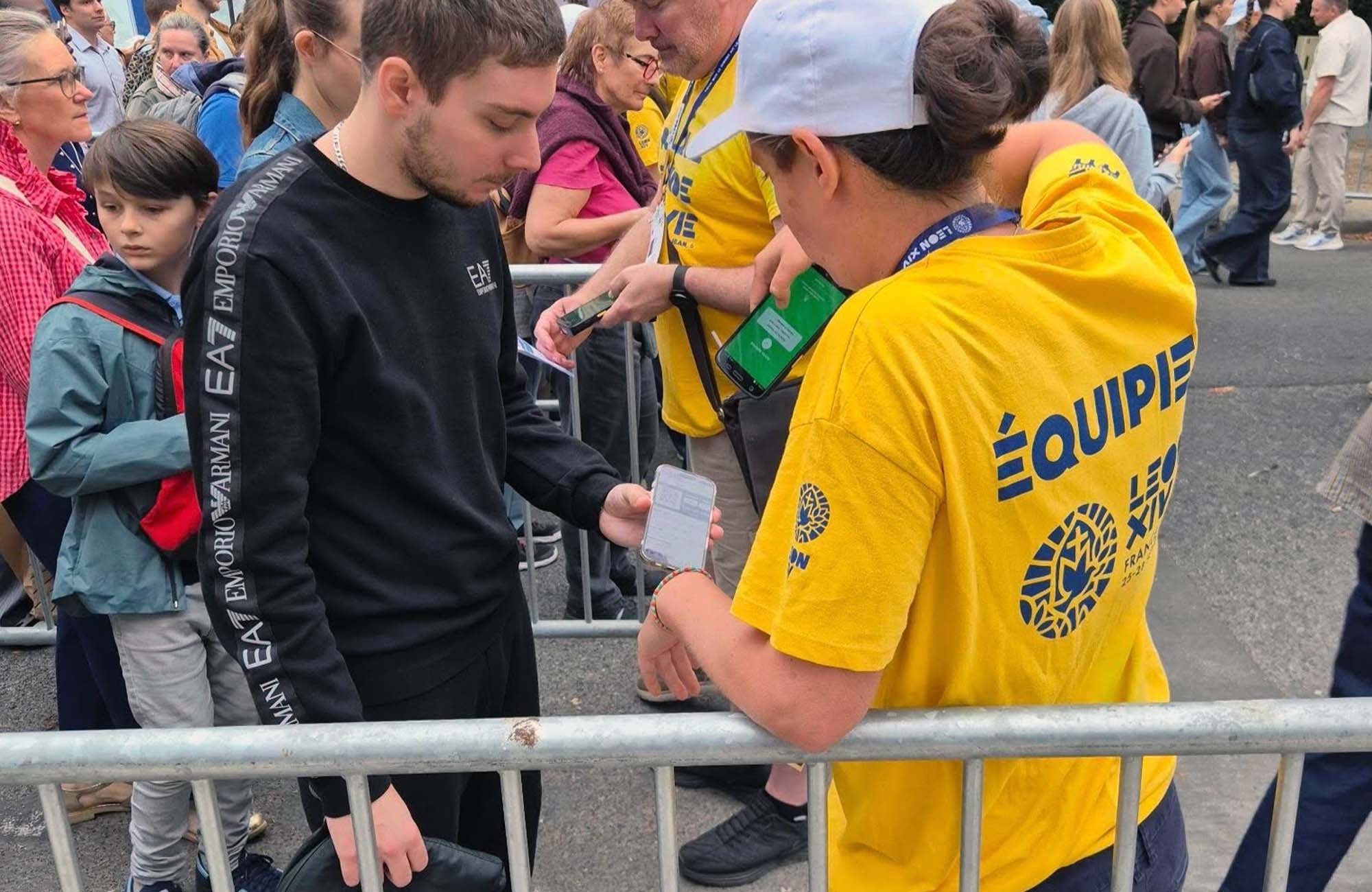
At the Stade de France, our set-up had to work seamlessly behind the existing infrastructure. The necessary data was sent directly to the stadium’s system so that Weezevent tickets were recognised by its equipment and attendees were directed to the right gates.
The exchange works both ways. Once entry has been validated by the stadium’s equipment, the information is sent back to our access control solution to update admissions in real time. This allows the organiser to keep their ticketing and attendance tracking within our environment, without adding a second system on site.
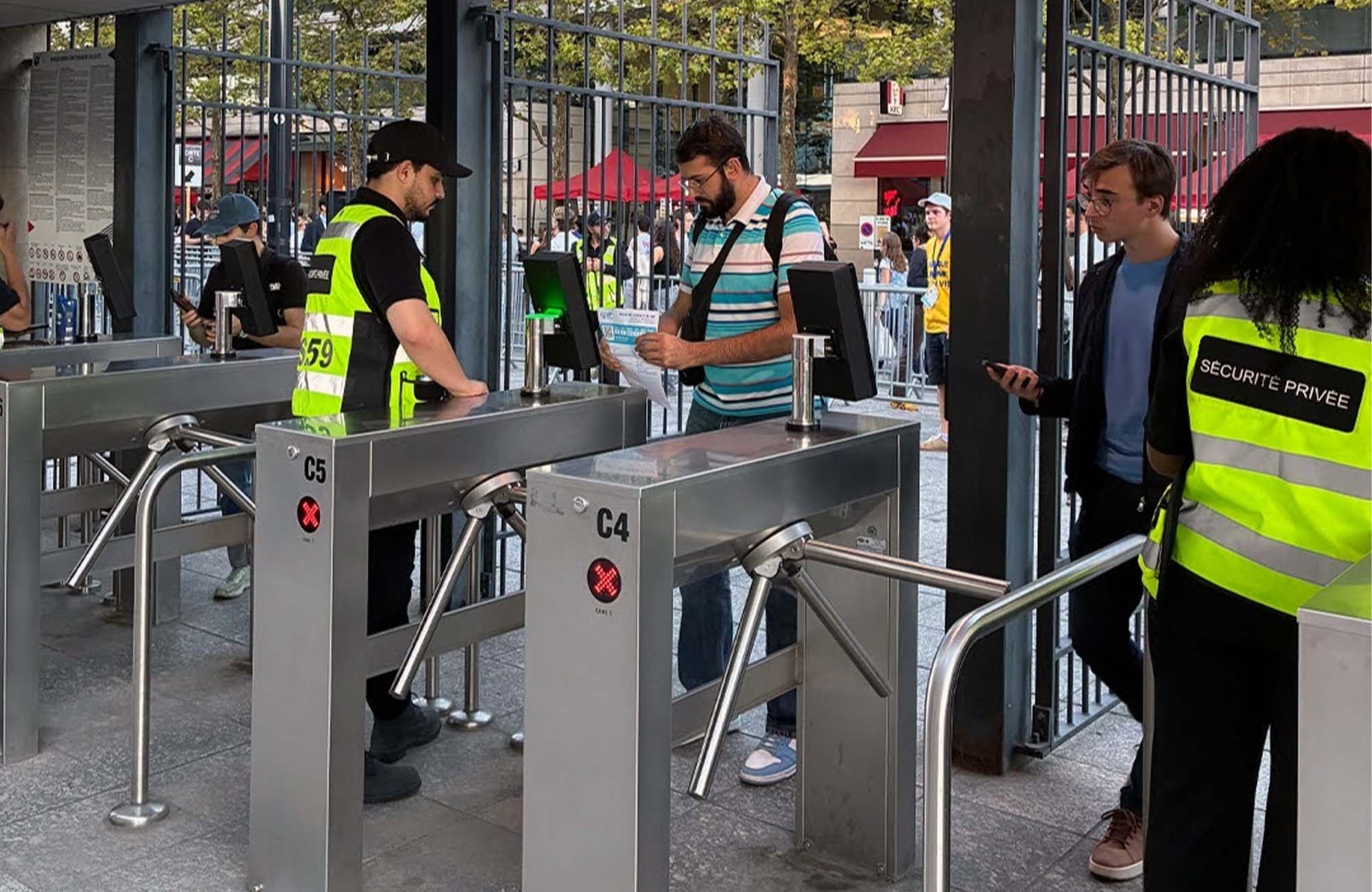
Elsewhere, the rules changed with the journeys. In Lourdes, some accreditations allowed multiple passages between different areas, such as the Prairie or the Grotto. Access control therefore had to accept multiple entries and exits, provided the profile held the corresponding rights.
In Metz, some invitations granted access to specific areas. During intra-site checks, instructions appeared directly on the device, telling the operator which wristband to hand over. Teams could then visually identify authorised people without rescanning their ticket at every checkpoint.
One variable that was impossible to pin down in advance: the actual pace of arrivals. Dashboards dedicated to each event made it possible to monitor fill rates, the number of active devices and throughput at each gate – all visible to organisers from their operation centres.
Teams could therefore compare the number of attendees yet to arrive with the pace observed at each entrance, and quickly adjust the set-up when a gate was no longer adequately sized.
The result: different journeys, shared control
Three different set-ups, with the same demand for continuity from one site to the next. Teams kept control of accreditation, capacity and access throughout the visit, while adapting operations to each configuration.
No single model was imposed everywhere, but a system robust enough to handle the load and flexible enough to switch approaches depending on the site. Feedback from the GL Events teams, responsible for staging the public gatherings during the apostolic journey in Paris, confirms the strength of the set-up:
“A huge thank you to the whole Weezevent team for your commitment and professionalism. You always stepped up to every challenge on this project and can be proud of what you’ve achieved. What a performance and, above all, what a team. A wonderful first collaboration.” Delphine Girard, Director of Productions at Live! by GL Events.
Whether your event welcomes 5,000 or 100,000 attendees, the same questions around accreditation, registration and access control arise. What changes is the scale, not the need to stay in control of your set-up.