The forecast changes overnight. Your main car park is waterlogged, the gates are due to open in two hours and ticket holders are already travelling. Who makes the call, and how quickly can your team put an alternative in place?
An event contingency plan gives you a response to work from when circumstances change. For an outdoor event, that means preparing for the effects of weather across your site, alongside technical failures, transport disruption and unavailable suppliers.
Whether you are organising a festival, an outdoor concert or a sporting event, these eight steps will help you build a practical plan. You will also find a template to adapt and an example showing how it works.
Summary
What is an event contingency plan?
An event contingency plan sets out what your team will do if something disrupts your event. It identifies the situations that require action, who is responsible, the alternative arrangements available and how you will communicate changes. It should cover disruption before, during and after the event.
Your risk assessment identifies hazards and the measures needed to control them. Your contingency plan explains how operations will change if those measures are insufficient or circumstances change. It should connect to your emergency procedures for situations requiring an immediate safety response.
The aim is to protect people and make timely decisions. Sometimes that means using a backup. Sometimes it means delaying, stopping or cancelling the event.
1. Identify the risks specific to your outdoor event
Start with your site and the way people will use it. Walk the grounds with the relevant suppliers and safety specialists, and ask the landowner about previous flooding, access problems and exposed areas. Include the build and breakdown, when crews may be working outside the hours covered by your full event team.
Consider what could interrupt each part of the operation:
- Heavy rain, flooding, high winds, lightning or extreme heat affecting people, structures and ground conditions.
- Loss of electricity, connectivity, drinking water or essential sanitation.
- Blocked entrances, unsafe queues, inaccessible routes or disrupted public transport.
- A supplier failing to deliver, an artist cancelling or essential staff being unavailable.
- Fire, a serious medical incident, crowd pressure or a security incident requiring your emergency procedures.
Assess both likelihood and severity. A rare incident with serious consequences still needs a response. Our guide to managing the unexpected at an event explores why different levels of disruption need different responses.
Look for connections between risks, too. A flooded car park can delay staff, block deliveries and create queues on nearby roads. Planning for those consequences makes your response much more useful than simply listing “bad weather”.
2. Build a weather contingency plan with clear action points
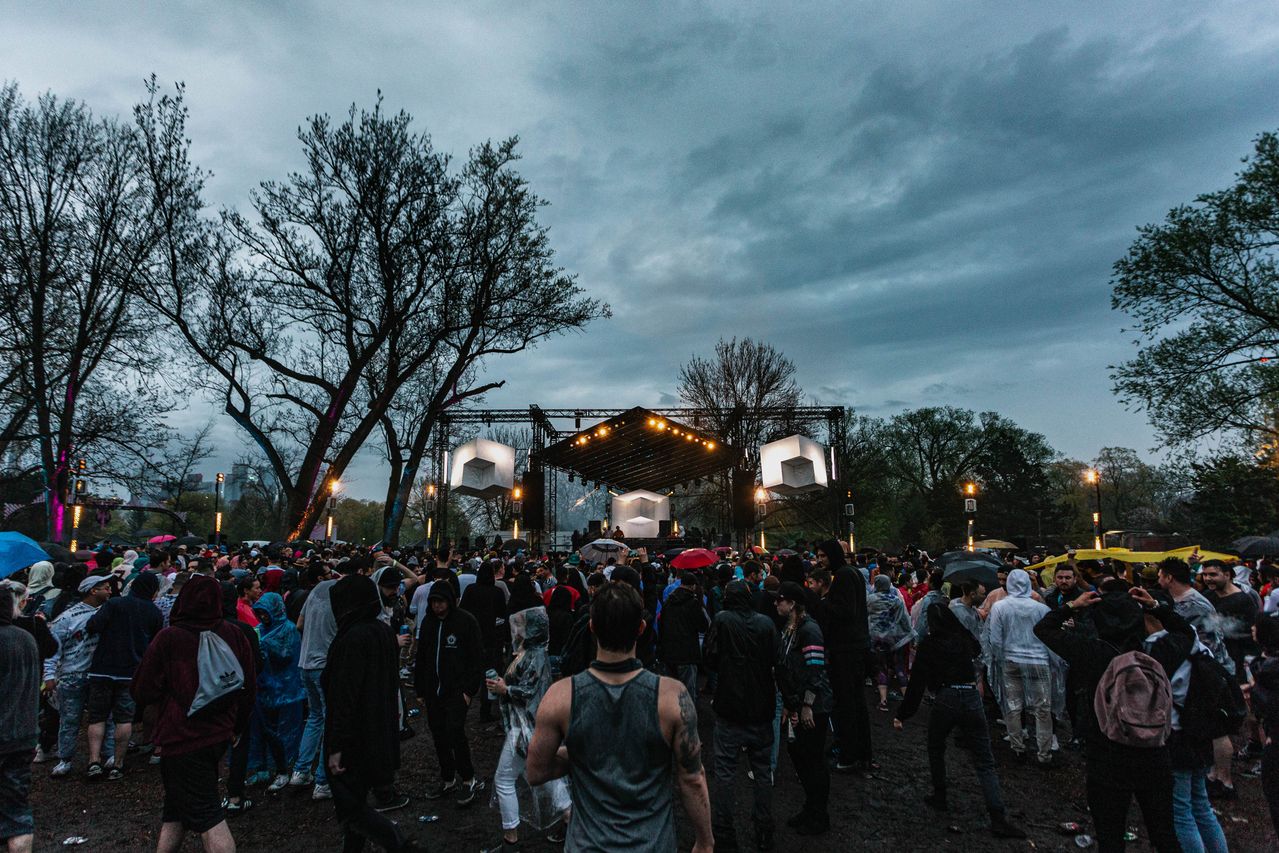
For outdoor events, weather deserves its own part of the plan. Assign someone to monitor forecasts and conditions on site, with an agreed reporting schedule and a way to raise concerns immediately.
Use Met Office warnings alongside local forecasts and observations. Read the expected impacts and timing as well as the warning colour. Larger or more exposed events may benefit from a specialist forecasting service.
Prepare for the effects on your site
Your rain contingency plan should address drainage, ground protection, alternative access and parking. Check whether emergency vehicles and attendees with access requirements can still use the routes you have planned.
For hot weather, plan drinking water, shade, welfare provision and staff breaks with your safety and medical teams. Identify which activities or schedules may need to change.
For wind and thunderstorms, agree procedures with competent safety and structural specialists. A marquee is not automatically a safe refuge in severe weather, and tents do not provide protection from lightning. Any alternative location must be suitable for the hazard and the number of people using it.
Decide when to act
Record the forecast or observed conditions that trigger each response. These might include activating alternative parking, restricting an area, delaying opening or stopping a performance.
Base structural decisions on documented supplier limits and competent advice. HSE guidance on outdoor equipment highlights the need to account for wind loading and monitor local conditions. Allow enough time to complete protective actions before operating limits are reached.
Also define the checks needed before reopening. An improving forecast alone does not confirm that structures, electrics or access routes are safe to use again.
3. Make it clear who can change or stop the event
Your team needs to know who can delay opening, suspend an activity, authorise extra spending and approve a restart. Assign a named lead and deputy for each decision, with contact details and radio channels.
For larger events, bring reports together through event control so that production, security, medical teams and communications work from the same information. At a smaller event, several responsibilities may sit with one person, but they still need to be explicit.
Agree how decisions will be coordinated with the venue, landowner and relevant authorities. Staff must also know how to raise an alarm and stop an unsafe activity immediately, without waiting for a routine meeting.
Keep a decision log recording the time, information available, action taken and person responsible. It helps the next shift understand what has happened and gives you a record for the debrief.
4. Prepare backups for essential operations
A backup is useful when it is available, compatible and ready to use. Confirm replacement equipment, supplier response times and trained cover for essential roles before the event.
Have your technical team plan backup power for critical services, including emergency communications and lighting. Test the changeover, and keep charged spare devices and batteries where the teams using them can find them.
Know how many visitors are on site
Keeping an accurate visitor count is a safety measure when conditions change. With WeezAccess, our access control solution, scan each visitor in at entry and scan them out when they leave. This gives event control an exact number of people still inside the site and helps the team decide when to pause admissions.
To keep the number exact, scan every entry, exit and re-entry across all access points and keep devices synchronised. Include the live count in your event contingency plan so admissions, security and event control work from the same information.
Keep ticket checks working during a connection loss
Check what your access control system can do offline. The WeezAccess app can continue checking tickets against downloaded data when connectivity drops. Login and the initial data download require an internet connection, so prepare every device before opening.
While devices are disconnected, new sales and scans on other devices will not synchronise. Agree how your team will handle those cases, including duplicate-ticket risks across entrances, and synchronise again when connectivity returns.
Understand how payments will operate
If your event uses cashless wristbands or cards, WeezPay supports offline cashless purchases. That gives you an option for maintaining sales during an internet outage. Confirm the requirements for top-ups, bank card transactions and reporting separately with your project team.
Test these arrangements with the people who will use them. A working spare terminal is little help if nobody knows where it is or how to take over with it.
5. Plan how you will reach attendees and staff

Prepare messages for the changes you are most likely to make: delayed opening, a closed entrance, altered transport arrangements, a programme change or cancellation. Name the person who checks the operational details and the person who publishes each update.
Every message should explain:
- What has changed and which attendees are affected.
- What people need to do now.
- Where they can find confirmed information.
- When the next update will be available.
For people who have not arrived, combine your event website and social channels with direct communication to ticket holders. With WeezTicket, our online ticketing solution, you can collect attendee details during booking and access your registration data to prepare these communications.
This also matters when admission is free. As we explain in our free event registration guide, ticketing gives you a way to contact registered attendees when practical information changes. If one person books for a group, ask them to pass updates to everyone attending.
On site, plan for people who cannot receive a phone notification. Use the public address system, signs and briefed stewards, with accessible communication arrangements. Give staff a backup communication method if mobile networks fail.
A change of plan needs to reach the people already queuing as well as those still at home.
6. Check your contracts, insurance and contingency budget
Weather disruption can leave you dealing with supplier invoices and ticket enquiries long after the site has closed.
In September 2026, IQ examined the legal risks facing festivals in extreme weather. Its reporting highlighted limited scope for festivals to challenge official cancellation orders, alongside growing reluctance among insurers. For organisers, this underlines the value of reviewing the financial consequences well before an incident.
Ask your legal adviser to review cancellation, postponement and force majeure clauses. Establish what the wording means for weather disruption or an authority’s decision, who must be notified and which payments remain due.
Discuss the actual risks with your insurance broker. Check whether cover includes outdoor weather disruption, postponement, abandonment and additional costs. Public liability and event cancellation cover serve different purposes, and policy conditions matter. For example, Hiscox identifies outdoor adverse weather as cover that needs early attention, with restrictions on arranging it close to the event.
Build your contingency budget around the alternatives you may need to activate, such as extra ground protection, transport, equipment or staffing. Record who can approve that spending and how funds can be accessed quickly.
Prepare your ticket refund and postponement process in advance, with terms that respect applicable consumer rights. If cancellation becomes necessary, stop sales and coordinate attendee communications and refunds with your ticketing provider. Weezevent’s event cancellation procedure explains the operational steps.
7. Use an event contingency plan template your team can follow
Give each significant scenario a short action sheet. Keep it with your site plan, contact list and relevant emergency procedures, and make the current version available offline.
Copy this event contingency plan template for each scenario. At the top, add the event name, location, plan owner, version and review date.
| Field | What to record |
| Scenario and impact | What could happen, where, and who or what would be affected. |
| Trigger | The specific condition or decision that activates the response. |
| Lead and deputy | Names, contact details and authority to make decisions. |
| Immediate actions | The steps to take first, in order, with responsibilities. |
| Alternative arrangements | Confirmed equipment, routes, suppliers or programme changes. |
| Communications | Who needs an update, the channel, message owner and timing. |
| Resources and spending | What is available, what it costs and who can authorise it. |
| Recovery or escalation | Checks before restarting, who approves them and when to escalate. |
Event contingency plan example: a waterlogged car park
Imagine a day festival where the main grass car park becomes unusable before opening. Your trigger is a site inspection confirming that it cannot safely accept vehicles.
The transport lead informs event control and activates a previously agreed alternative with enough capacity and a suitable pedestrian route. Stewards move to the agreed positions, road signage changes, and communications directs ticket holders to the revised arrival instructions.
If the alternative is unavailable, the event director follows the agreed escalation plan, which may include delaying opening. The original car park only reopens after the responsible team has checked and approved it.
This is an illustrative scenario. Your own plan needs actual locations, names, capacities and arrangements confirmed with the relevant parties.
8. Brief your team and rehearse the decisions
Before the event, run a tabletop exercise: talk through a realistic disruption with the people who would respond. Start with a change in the forecast, then add a complication such as an unavailable supplier or a loss of connectivity.
Ask each team what it would do, what information it needs and who it would contact. Check whether the alternative arrangements can be activated in the time available. HSE’s incident and emergency planning guidance includes testing and validation as part of preparation.
Turn any gaps into assigned tasks. Confirm contact details, test equipment and brief replacement staff as well as the core team. Our advice on saving time when organising an event also recommends allowing time for unexpected work in the run-up.
Review the plan when the site layout, attendance, forecast or suppliers change. After the event, use the decision log and team feedback to improve it for the next edition.
Your ticketing, access control and payment arrangements all belong in your contingency planning. At Weezevent, we can help you assess how these systems will work across your site and what your teams need to prepare before opening.