
A car boot sale is one of the most accessible community events to run. It brings people together, gives sellers a simple way to clear out unwanted items and can raise money for a good cause or a local organisation. For the person organising it, though, there is more to think about than opening a field on a Sunday morning.
This guide covers how to organise a car boot sale from start to finish, whether you are running one as a fundraiser, a community event or a regular commercial venture. From finding a site and sorting permissions to taking seller bookings and managing the day, here is everything you need to plan a successful sale.
Summary
1. Decide on the type and scale of your sale
Before anything else, be clear on what kind of car boot sale you are running and why. The purpose shapes every decision that follows, from the site you choose to the fees you charge and how you promote it.
Common formats include:
- A fundraiser for a school, club, church or charity, where profits go to a specific cause
- A community event run by a local group to bring people together
- A regular commercial car boot sale run as an ongoing venture with paying sellers
Decide roughly how many sellers you want to accommodate and how many visitors you expect. A small school fundraiser with 30 pitches is a very different undertaking to a regular sale with several hundred, and being realistic about scale from the start keeps the rest of your planning grounded.
2. Find and secure a location near your community
The site is the single most important factor in a successful car boot sale. You need enough space for sellers to park and display their goods, room for visitors to park separately, and good access in and out to avoid congestion.
Common options include school grounds, community fields, church car parks, sports club land, showgrounds and large private car parks. When assessing a site, consider:
- Size: enough space for seller pitches, visitor parking and clear walkways between rows
- Access: a road network that can handle traffic arriving and leaving without blocking local residents
- Ground conditions: a firm surface that will not turn to mud after rain, or a tarmac alternative for wet weather
- Facilities: toilets, or space to bring in portable ones, and somewhere to position refreshments
Once you have found a suitable site, secure written permission from the landowner well in advance and agree terms in writing, including the date, the hire fee if any, and who is responsible for what.
Have a wet-weather plan from the outset. A hard-standing surface or a covered area can be the difference between running your sale and cancelling it after a rainy week.
3. Sort out permissions, licences and insurance
This is the step most first-time organisers underestimate. Getting it right protects you legally and financially, so it is worth addressing early.
The main things to check are:
- Local council rules: some councils limit how many car boot sales a site can hold each year before planning permission is required. Contact your local authority to confirm what applies.
- Public liability insurance: this protects you if a visitor or seller is injured or their property is damaged. It is essential for any public event of this kind.
- Licensing: if you plan to sell alcohol or provide certain types of entertainment or hot food, additional licences may be required.
- Waste and clean-up: agree who is responsible for clearing the site afterwards, as leaving a mess can affect your ability to use the location again.
If your sale is a fundraiser for a registered charity, check whether that changes any of your obligations, as some rules differ for charitable events.
4. Set your pitch fees and entry charges
Car boot sales typically generate income in two ways: a fee charged to sellers for their pitch, and sometimes a small entry charge for visitors. Setting these correctly is what makes the event viable.
Pitch fees vary depending on the type of sale and the region, but they are usually charged per car or per pitch. Decide whether you will offer different pitch sizes, for example a standard car space versus a larger space for a van or trailer, and price them accordingly.

Many organisers keep visitor entry free to attract as many buyers as possible, since more visitors mean better sales for pitch holders and a stronger reputation for the event. Others charge a small entry fee, particularly for larger or fundraising sales. Weigh up which approach best fits your purpose and your audience.
5. Take seller bookings and manage pitches
Once your fees are set, you need a way to take bookings from sellers and keep track of how many pitches you have sold. For small sales, this can be done informally, but as numbers grow, a proper booking system saves a great deal of time and confusion on the day.
An online booking page lets sellers reserve and pay for their pitch in advance, which gives you an accurate count of confirmed sellers, reduces queues at the entrance on the morning and means you are not handling large amounts of cash at the gate. It also gives you a list of seller contact details for reminders and future events.
Weezevent lets you create a booking page for your car boot sale, sell pitches of different sizes as ticket types, and manage entry on the day through a free scanning app. Sellers book and pay online, and you check them in quickly on arrival, which keeps the start of the day calm and organised.
Take a mix of advance bookings and keep a few pitches available on the day for sellers who turn up spontaneously. Advance bookings give you certainty, while on-the-day spaces capture the casual sellers who make up a good part of many car boot sales.
6. Plan the layout and logistics
A well-organised site makes for a smoother event and a better experience for everyone. Plan your layout in advance rather than improvising on the morning.
Think about:
- Seller rows: mark out pitches clearly and leave wide enough walkways for visitors to browse comfortably
- Traffic flow: separate seller and visitor entrances if possible, and plan a one-way system to keep vehicles moving
- Parking: designate visitor parking away from the selling area so it does not block browsing
- Signage: clear signs from the main road and around the site help everyone find their way
- Refreshments and toilets: position these where they are easy to find but do not cause congestion
Recruit enough helpers to manage the entrance, direct traffic, mark out pitches and deal with any issues that come up. A team briefed in advance keeps everything running while you focus on the event as a whole.
7. Promote your car boot sale online and offline
Even the best-organised sale needs people to turn up, both as sellers and as buyers. Start promoting well before the date, and target your local area specifically, since car boot sales draw a local crowd.
Effective ways to spread the word include:
- Local Facebook groups and community pages, which are among the most effective channels for reaching nearby sellers and buyers
- Posters and flyers in shops, community centres, libraries and on local noticeboards
- Listings on car boot sale directory websites, which many regular buyers check
- Word of mouth through schools, clubs and community organisations connected to the event
- Roadside signs in the days before, where permitted, to catch passing trade
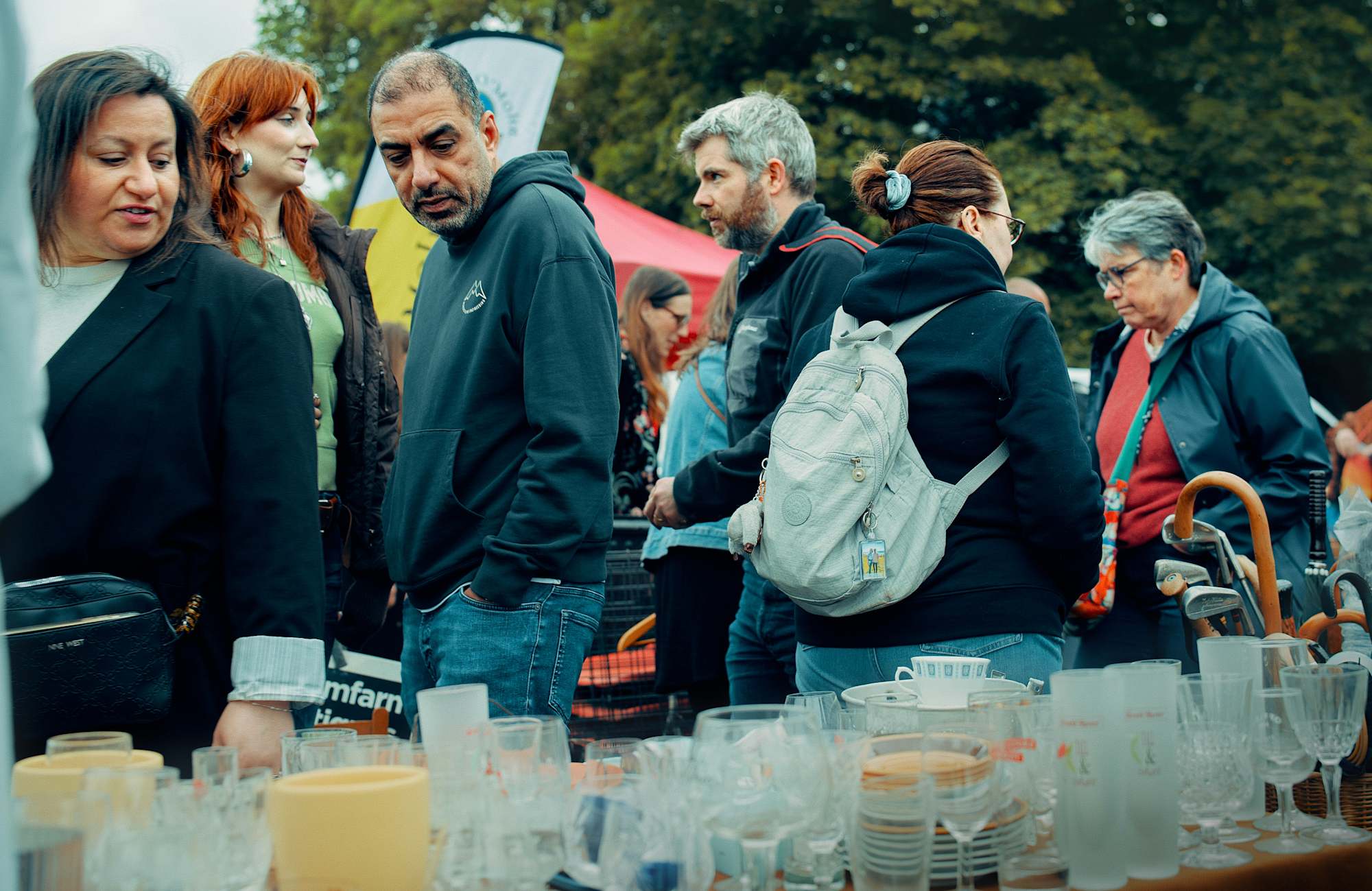
Make sure every piece of promotion includes the essentials: date, times for sellers and buyers, location, pitch fees and how to book.
8. Turn the day into a success
On the day, arrive early to set up before sellers begin turning up, which is usually well before the official start time. Have your team in position at the entrance, ready to check in booked sellers, take payment from any on-the-day arrivals and direct everyone to their pitches.
Keep the entrance moving to avoid a queue building on the road outside. Once sellers are settled and buyers start arriving, your focus shifts to keeping the site running smoothly: managing traffic, handling any questions and dealing with issues as they come up.
At the end, make sure the site is cleared and left as you found it. A clean site protects your relationship with the landowner and your ability to run the sale again, which matters if you are planning to make it a regular event.
Knowing how to organise a car boot sale comes down to preparation: the right site, the correct permissions, sensible fees and a booking system that keeps the day under control. Get those foundations in place, and a car boot sale is one of the most rewarding community events you can run.
With Weezevent, event organisers can simplify event management thanks to online ticketing, access control and advanced CRM tools. These solutions help professionals focus on delivering memorable experiences while ensuring events run smoothly in a fast-paced industry.
