The site is clear, you’ve returned the last of your rented equipment, and you can be proud that you’ve just pulled off your first festival.
Before you switch off for some well-deserved rest, there are some things that can’t wait. A few weeks of work can turn your first edition into the baseline for your second. Every festival is different, so use this list as a starting point.
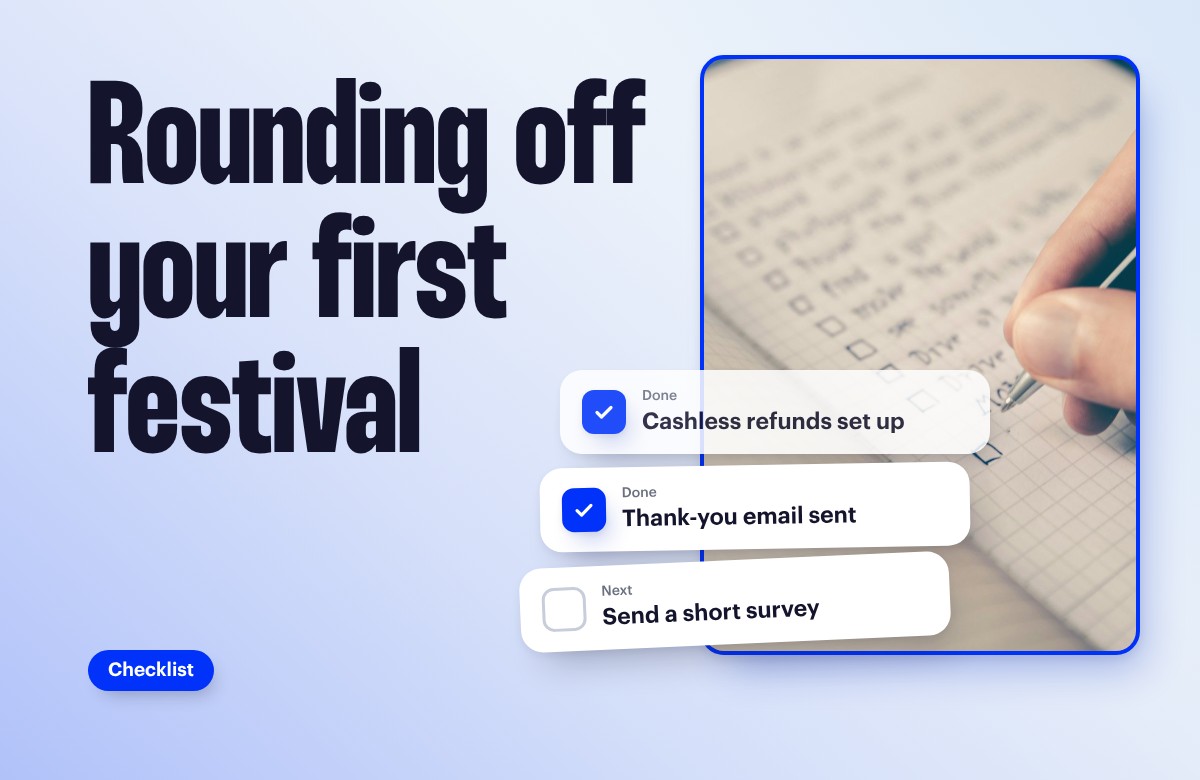
The first days after your festival
☐ Set up your cashless refunds before you write to anyone.
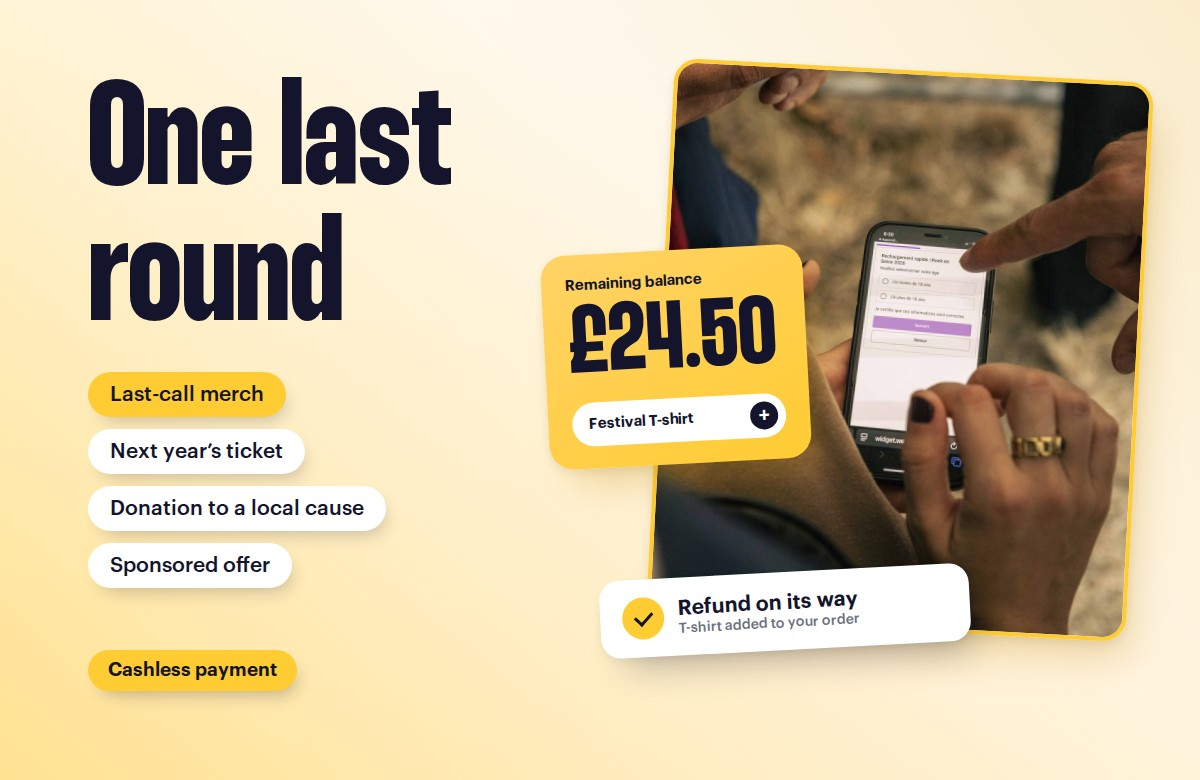
Choose between automatic refunds and refunds on request, and set a deadline. Refunds on request let you show an offer before the refund: put the balance towards next year’s ticket, buy a last-call merch item, or donate it to a good cause. Keep the refund itself to one click, so the offer feels like a choice rather than a hurdle.
☐ Send one thank-you email that does three jobs.
Thank people, give them the refund link and deadline and, if applicable, share next year’s early-bird or pre-registration link. Send two versions. Attendees get the refund block. No-shows get a “we missed you” message with pre-registration, plus the refund block if they loaded credit online and never used it.
☐ Repeat the refund deadline everywhere.
Post it on social media and on your event page, and send a reminder email a few days before it closes. Every balance refunded or turned into a ticket on time is one less support request later.
☐ Switch your event page to “see you next year”.
Close ticket sales, add a pre-registration or waitlist form, and give the dates as soon as you know them.
☐ Publish your photos and aftermovie, and tag your artists and partners.
The buzz fades within a week or two, so use it while it’s there.
☐ Send a short survey.
Send a satisfaction survey with five questions at most. End with “Will you come back?” and “What would make you bring a friend?”. The first answer is your first demand forecast for next year.
Build your second edition
With Weezevent, every ticket sold, every scan at the gates or inside the site and every cashless payment from your first edition is recorded in your reports. That means you can plan the next one from what actually happened, not from impressions or estimates. Each number below points to a decision.
Ticketing
☐ Your sales curve by price phase.
Which phase sold out early, which stalled, and what share of tickets sold in the final week? This sets next year’s phase dates and price steps.
☐ Sales by channel.
Use your attribution data, tracking links, and promo codes to see which channels actually drove sales and what each ticket cost you. Next year’s budget should follow the cheapest tickets, not the most clicks.
☐ Where your buyers live.
Postcodes show your real catchment area, so you know where to advertise and whether shuttles are worth running.
☐ Ticket types and tickets per order.
If one ticket type sold out early, raise its quota or its price. If people bought in groups, offer a group ticket.
☐ Your waitlist.
Its size measures the demand you couldn’t serve. It’s your best argument for a bigger capacity.
Access control
☐ Your no-show rate.
Compare tickets sold with tickets scanned. It tells you how much you can safely oversell, and it gives you the real headcount to plan staff and stock from.
☐ Your arrival curve.
When did people actually arrive? Schedule your opening act, bar openings and security shifts around it. If most people arrived a little late, give them a reason to come in earlier, such as a happy hour at the bars or a popular act early in the line-up. Next year, compare the two arrival curves to see whether it worked.
☐ Entries per hour at your peak, per lane.
Find the busiest hour in your access control report and divide it by the number of entry lanes. That’s the throughput to staff for next year. Plan for the peak hour, not the daily average.
☐ Accreditations issued vs used.
Compare the crew, volunteer, press and artist accreditations you issued with those actually scanned. Unused accreditations still cost wristbands, catering and briefings, so set next year’s quotas from what was used.
On-site payment
☐ Settle up with your food and drink traders.
Pay each trader from their per-stand sales, minus any commission you agreed. Traders with their own Weezevent login can follow their sales live during the festival, so for them this is a final check.
☐ Sales by point of sale.
Compare your bars and food stands: which ones sold the most, and which stayed quiet. A quiet stand is usually in the wrong place or has the wrong offer, so move it, merge it or change its menu.
☐ Your transaction rhythm, by point of sale.
Look at the pace of orders through the day, not just the totals. A stand that slows down while the others keep going, or a dip when the site is full, usually points to a queue, a stock-out, a staffing gap or a technical problem. Find out which, and fix it for next year.
☐ Sales by product type.
See how your sales split between drinks, food and merch, and within drinks between beer, cocktails, wine, soft drinks, alcohol-free options and more. This split is your baseline: next year, it shows you exactly what your menu changes did.
☐ Your best and worst sellers.
Check what ran out and when, what didn’t move, and whether your alcohol-free and soft options kept up with demand. Next year’s menu and stock orders start here.
☐ Spend per attendee.
Note it as a benchmark rather than a target. Followed from one edition to the next, it tells you whether a longer menu or new products actually made people spend more.
☐ Online vs on-site top-ups.
Check how much credit was loaded online or on mobile, and how much at your cash desks. If your cash desks did most of the work, push pre-loading next year: it shortens the queues on site. It’s one of the easiest cashless improvements to make.
☐ Reusable cup returns.
Compare deposits charged with deposits returned. The gap is your cup loss, and it should set both your deposit amount and next year’s cup order.
Money and audience
☐ Reconcile your payouts against your budget.
Compare your ticketing and cashless payouts with the budget you started with. That’s your real profit and loss, and next year’s budget starts from it.
☐ Segment your audience in your CRM.
Split it into early buyers, last-minute buyers, no-shows, big spenders, locals and visitors from further away. Your cashless data tells you who your biggest spenders are. Each segment should get its own message and its own early-bird timing.
After the most demanding weekend of your year, it’s tempting to close the laptop and recover, and you should rest. But the first 30 days after your event are when your data is freshest and your audience most engaged. Rounding off well is the first task of next year’s festival, not the last task of this one.
You can do everything in this checklist with Weezevent. Ticketing, access control, cashless and CRM work together, so your sales, scans and payments are already in your reports when the festival ends. And you’re not on your own: our customer care team is here to help you find your numbers, set up your refunds and prepare your next edition.