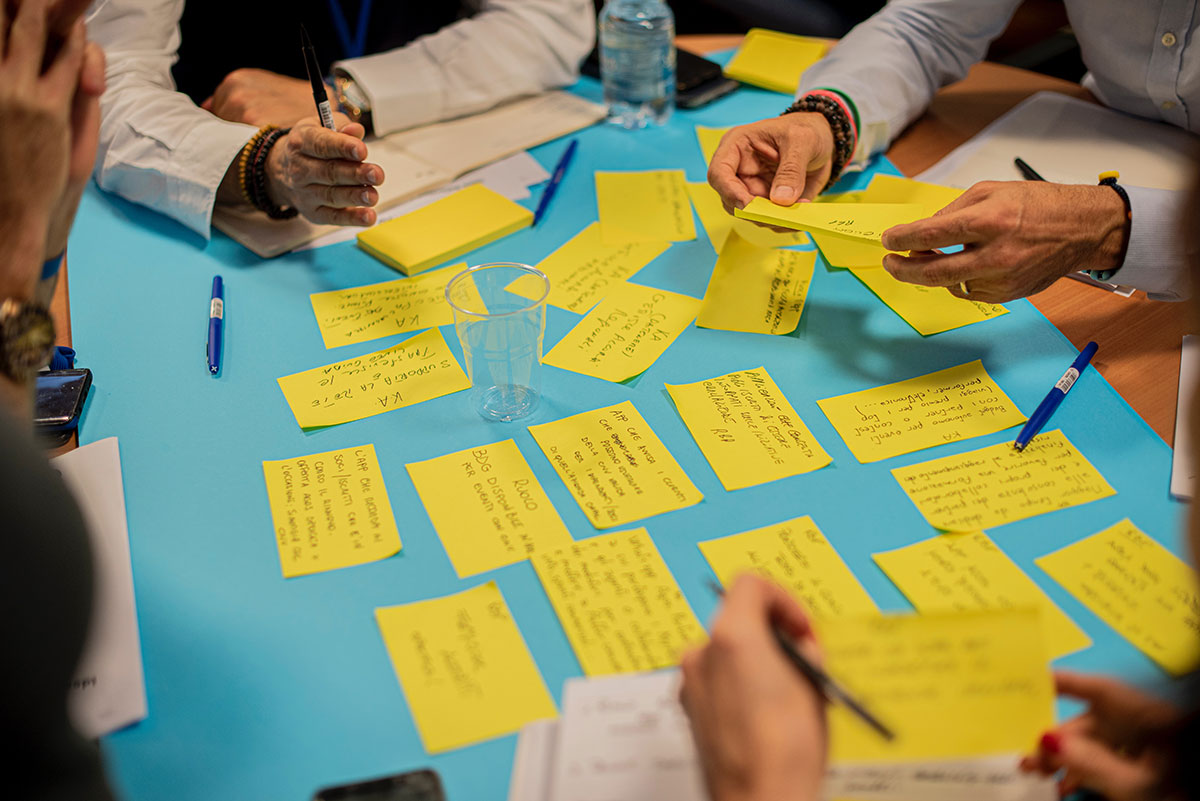
Workshops have become one of the most widely adopted event formats, used by businesses, community organisations, schools and individuals alike. Whether you want to develop skills within your team, introduce a new subject to a wider audience, or create space for creative thinking and collaborative problem-solving, knowing how to organize a workshop well makes the difference between a session people find genuinely useful and one they forget by the end of the day.
Online or in person, workshops are relatively straightforward to plan when you approach them with a clear structure. This guide covers every element to consider.
Summary
1. What is a workshop?
A workshop, or training session, is a structured gathering in which participants work together to exchange ideas, develop a specific skill or explore a particular subject in depth. Unlike a standard meeting or presentation, a workshop is participatory: everyone in the room is expected to contribute, discuss and engage with the material, not simply listen.
Businesses run workshops regularly, both in person and online, for all kinds of purposes and at every stage of the year. Workshops are also used across a wide range of sectors: creative industries, education, sport, professional development and community organisations all use the format to facilitate knowledge sharing and practical learning.
2. Define your objectives and target audience
Before planning anything else, be clear on what you want your workshop to achieve. Objectives might include introducing new ideas or methodologies, developing a specific skill set, encouraging creative thinking, solving a defined problem as a group, or building connections between participants.
Defining your target audience at the same stage is equally important. Who you are designing the session for shapes every subsequent decision: the level of complexity you pitch the content at, the speakers or facilitators you bring in, the format you choose and the language you use in your communications. A workshop for senior managers requires a different approach to one for new starters or a mixed community group.
3. Choose your date, format and venue
The date and format of your workshop are both significant decisions. Check that your chosen date does not clash with similar events, industry conferences or holiday periods that might affect attendance. For recurring workshops, establishing a consistent day and time builds familiarity and makes it easier for participants to plan ahead.
For in-person workshops, the venue should be easy to reach by public transport and offer the right facilities: a well-equipped room with reliable audiovisual systems, a stable internet connection and enough space for the activities you have planned. Accessibility matters too; the venue should be welcoming to participants with disabilities.
For online workshops, test your chosen platform, whether Zoom, Teams or another tool, well in advance. Check audio quality, screen-sharing functionality and any interactive features you plan to use. Whatever the format, set up an online registration system early to streamline the process and store participant information effectively. It simplifies sign-ups, gives you an accurate headcount and allows you to communicate with participants before the day.
4. Planning your workshop programme
A clear programme helps participants understand what to expect and arrive prepared. Structure your workshop agenda to include a welcome and introduction, themed sessions or presentations, practical activities, breaks and time for open discussion. Leaving space for participant feedback during the session, rather than only at the end, improves engagement and allows you to adjust the pace or content in response to the room.
Keep the core objective in mind throughout. A workshop is ultimately about learning, exchange and practical application. Every element of the programme should serve that purpose.
5. Recruit speakers and facilitators
Find subject matter experts who can bring genuine depth to the topics you are covering. Look for people with relevant experience who are also capable of presenting their knowledge in an engaging and interactive way. A good facilitator or moderator is particularly valuable for keeping discussions on track, drawing out contributions from quieter participants and managing the energy of the room across a longer session.
6. Communicate with your audience
Promoting your workshop effectively is essential for good attendance. Use the channels your target audience already engages with: social media, newsletters, partner networks and personal invitations. Ask your speakers, sponsors and partners to share the event within their own networks. The more specific your messaging is about what participants will learn or take away, the more likely it is to convert interest into registrations.
Send a reminder to registered participants in the days before the event. Include practical information, any materials they should review in advance and a clear outline of the programme. A well-informed participant arrives in a better state to engage.
7. Organize your materials in advance
Prepare all visual aids, handouts, slide decks and practical materials well before the day. If your speakers are producing their own presentations, set a deadline for receiving them in advance so you have time to review and consolidate everything into a coherent flow. For in-person events, confirm logistics for any speakers or participants travelling to the venue, and check that all equipment is in place and tested before the session begins.
8. Manage the event on the day
On the day of your workshop, arrive early enough to make sure everything is in place before participants start arriving. Welcome people as they come in, introduce speakers clearly and maintain a calm, attentive presence throughout the session. Keep communication open with your facilitators and speakers so that any unexpected issues can be addressed quickly and adjustments made without disrupting the flow. Make sure participants have everything they need throughout, including materials, water and clear directions to any relevant facilities.
9. Collect participant feedback
At the end of the workshop, ask participants to complete a short satisfaction survey. Cover the aspects that matter most to future planning: the quality of the content, the pacing of the session, the effectiveness of the facilitators and the overall organisation. Gathering this feedback while the experience is still fresh gives you the most honest and useful responses.
10. Analyse results and improve future editions
Once you have collected feedback, review the results carefully. Look for patterns in what worked well and where participants felt the session fell short. Share the analysis with your speakers and organising team for a more complete picture. This debrief process is what turns a one-off workshop into a continuously improving programme, and it is where the most valuable lessons for future editions are found.
Knowing how to organize a workshop is about more than running a session smoothly on the day. It starts with clear objectives, a well-chosen format and the right registration tools, and it ends with a feedback loop that makes each edition better than the last.
Weezevent supports organizers across all event formats, from workshops and seminars to large-scale conferences and festivals, with online ticketing and registration, access control, cashless payments and marketing and CRM tools.