When organising a brand event, every decision serves a specific purpose: building awareness, encouraging loyalty or creating a stronger connection. For Othersea Bikini, whose identity is rooted in local production, Quebec craftsmanship and an engaged community, events have become a key driver of growth.
Founded in 2015 by Joëlle and Marie-Laurence, the brand was built around a workshop, a shop and a clear vision: treating every event as a direct investment in its community. They design their fashion shows, private evenings, and exclusive activations to create a consistent experience, without adding extra workload for this team of 11 people who are already heavily involved in the day-to-day running of the brand.
In this context, structuring the organisation without complicating operations is essential. This partnership to shows that ticketing can help with decision-making, anticipating volumes, securing revenue and strengthening the relationship with attendees, besides being a sales tool.
In this interview, discover how the 2 founders of Othersea Bikini use WeezTicket to organise their events and keep control over every detail of the experience.
Summary
1. Events: a key growth lever for small brands?
The first reason the 2 founders started seeing events as a growth channel was their desire to bring the brand to life beyond its products, create a direct connection with their community, gain local visibility and give shape to their universe. Their first event was a fashion show in a bar in Quebec City. The format worked, and it became a lasting part of their approach.
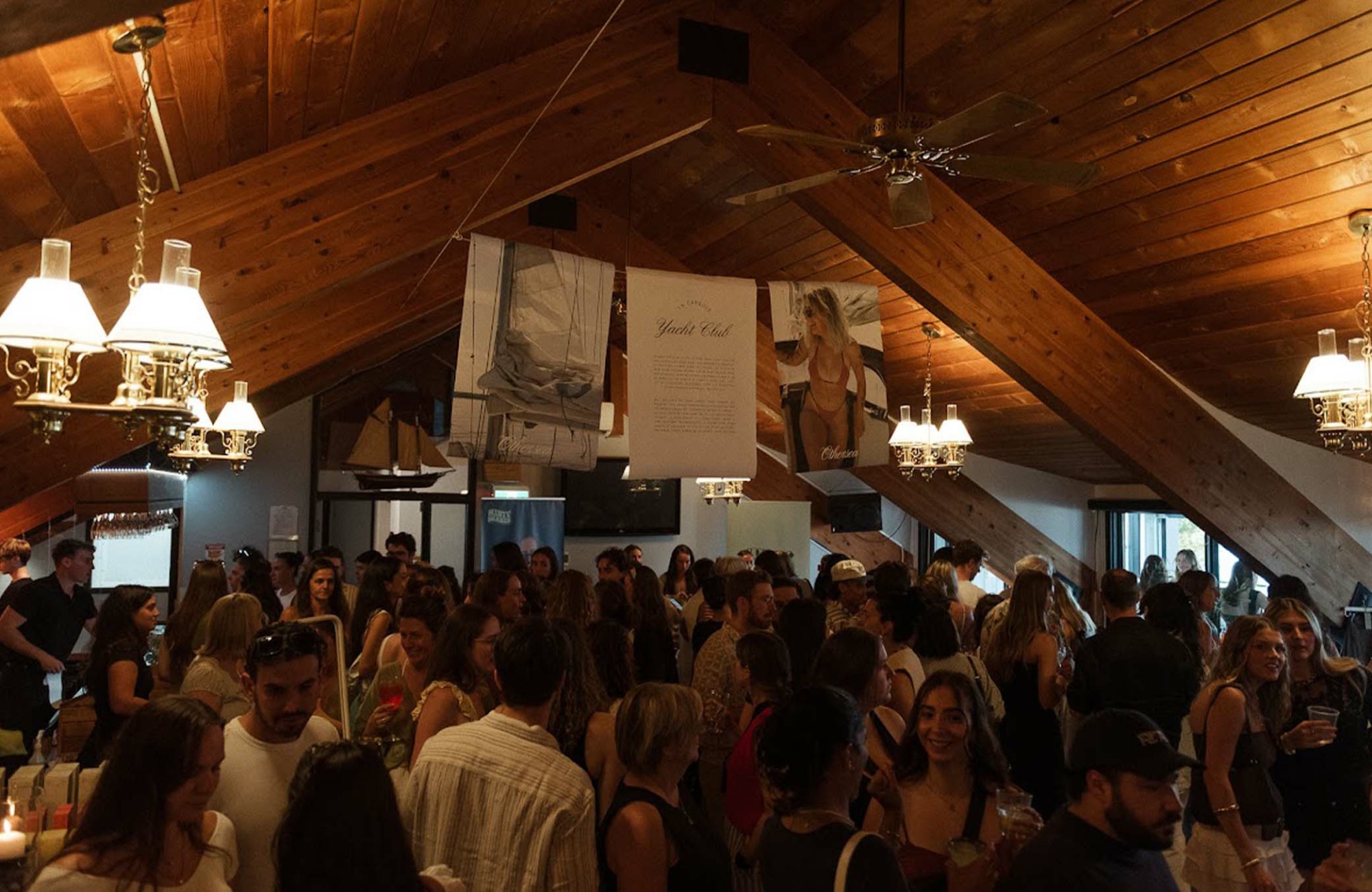
Ten years later, Othersea now organises evenings in private clubs, in-store workshops and seasonal activations that bring its community together throughout the year. The approach has evolved, but the intention remains the same.
“It’s about building customer loyalty, increasing brand awareness and creating a sense of belonging around the brand.”
This approach means keeping financial risk under control for each activation. With WeezTicket, free events organised by Othersea incur no fees. For paid tickets, whether standard access or a VIP package including partner gifts, fees are $0.99 incl. tax per ticket sold, plus 2.75% excl. tax per ticket sold. Revenue is paid out every 15 days, which allows a small business to manage its cash flow with greater peace of mind.
For Othersea, events influence:
- Brand awareness and local presence.
- Loyalty among an engaged community.
- The creation of a sense of belonging around the Othersea universe.
- Content creation and word-of-mouth on social media.
- The partial funding of activations through ticketing.
Ticketing becomes a direct extension of the brand strategy, serving both the community experience and the financial balance of each activation.
2. Can you organise events efficiently with a small team?
With a team primarily focused on designing collections, each member is already handling several priorities. For Othersea, event organisation cannot rely on one dedicated person; it needs to be handled collectively.
This is exactly what WeezTicket makes possible, as Joëlle explains:
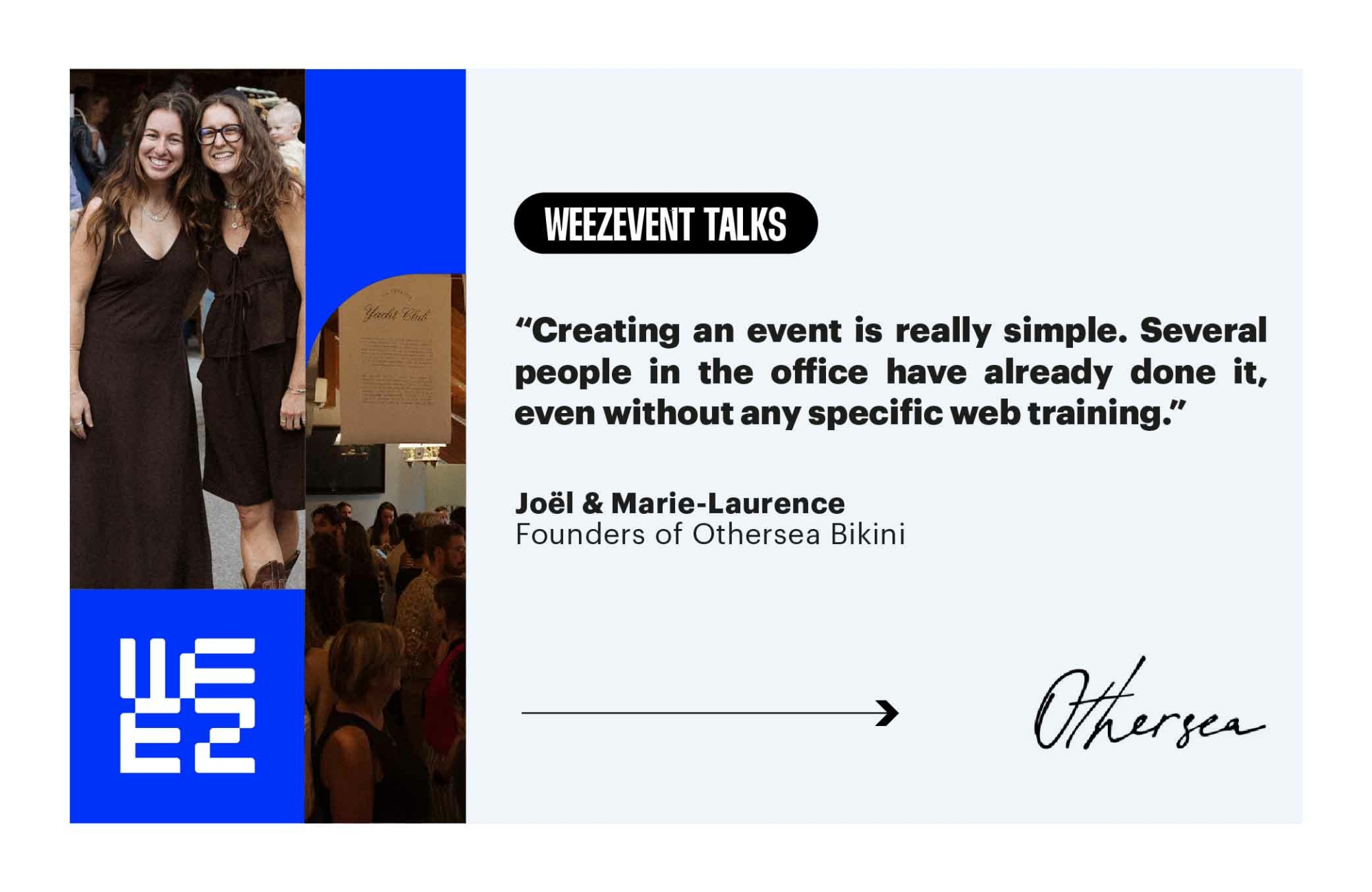
“Creating an event is really simple. Several people in the office have already done it, even without any specific web training.”
No dedicated resource or training is required. The platform can be picked up in just a few minutes, no matter who is using it.
Othersea always follows the same logic when setting up ticket types, made easier by the many pricing options available in our solution. Joëlle and Marie-Laurence have built their strategy around two pricing levels: standard access, often free, and a VIP package, which includes partner gifts or priority access to the new collection.
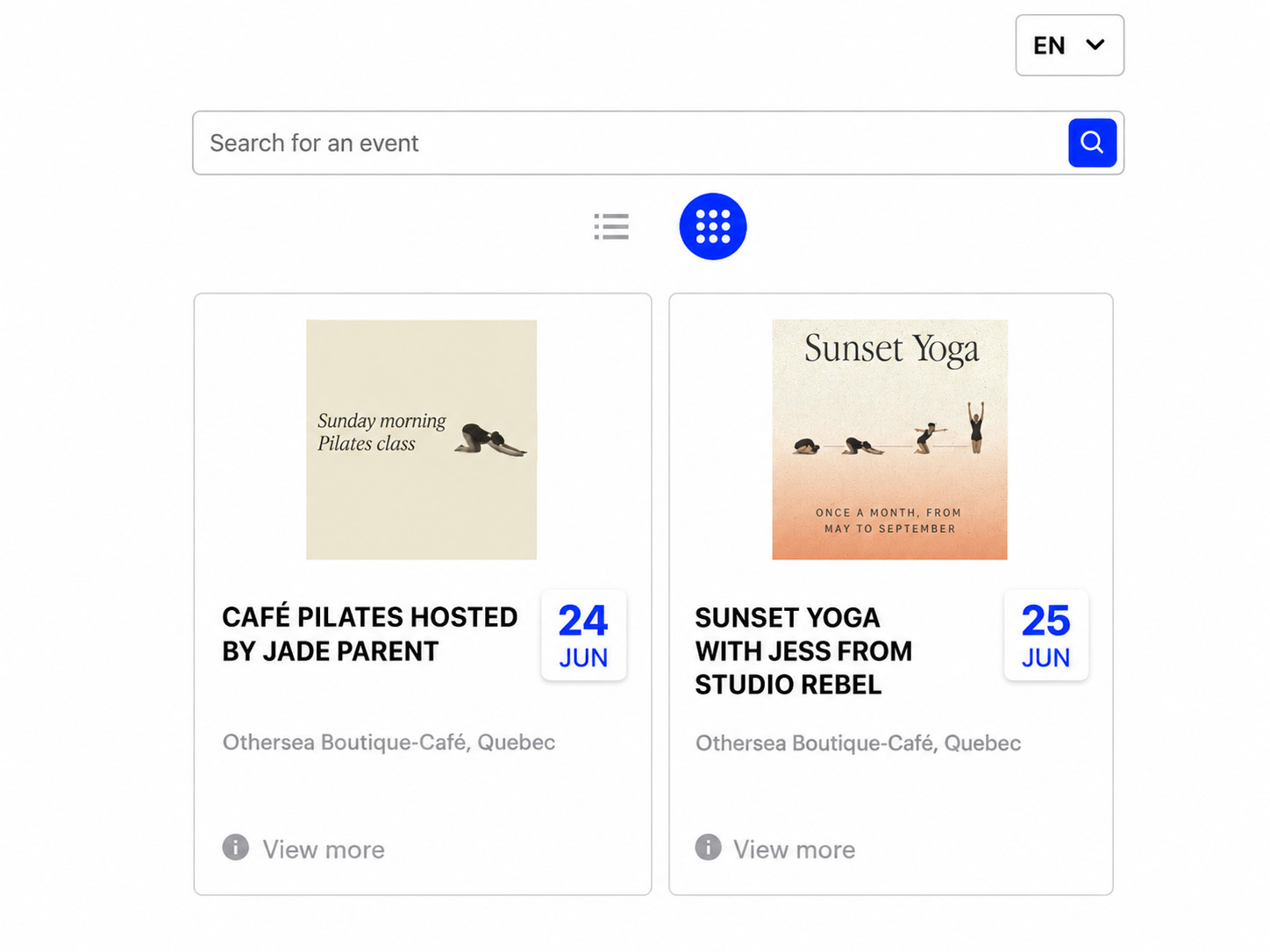
This simple structure remains effective and easy to repeat from one edition to the next. For recurring formats, such as monthly yoga workshops organised in partnership with a local studio, duplicating an existing event avoids having to start from scratch each time.
To make the most of the traffic generated by Othersea Bikini’s different ticketing pages, the brand has chosen to use the multi-event module. It displays all Othersea events directly on each mini-site created, so the community always has a full view of upcoming dates. For on-site sales, at the entrance to an evening or during a pop-up, the WeezTicket box office takes over without requiring any extra tools or parallel management.
3. How can you finance and budget your events when you have limited human and financial resources?
At Othersea, every event starts with the same question: how can we create a strong experience without taking unnecessary financial risks? They identify fixed costsin advance (such as food, drinks, logistics) and use this figure to define the ticket price. This is enough to helpto cover costs, not generate profit, and gives Joëlle and Marie-Laurence some operational flexibility.
“We don’t have a huge budget. But if 100 people buy low-cost tickets, it means we can allow ourselves to invest a little more.” Better visuals, a larger advertising budget on social media, and a more polished experience for attendees… For the 2 founders, ticketing makes it possible to give the project more ambition.
This approach requires real-time visibility over sales. The WeezTicket dashboard makes it possible to track registrations over time and adjust budget decisions accordingly: investing more if registrations exceed forecasts, or reducing spend if the event fills up more slowly than expected. Without a tracking tool, these decisions are made blindly and can lead to uncovered costs.
WeezTicket’s pricing options also make it possible to adapt each event to its context: free access to maximise attendance, a VIP ticket to generate revenue, or a partner rate for external collaborations. Each setup reflects a balance between accessibility, attendance and profitability.
Each event has a different balance between accessibility, attendance and profitability. Free access can help maximise attendance, a VIP ticket can generate revenue, while a partner rate can support external collaborations. With WeezTicket, these different setups can be created easily, depending on each event’s needs.
4. How can you better anticipate and manage your events day to day?
Beyond logistics and forecasting purchases, which WeezTicket dashboards help quantify, sales tracking becomes a performance indicator for Othersea’s content. Every Instagram post or Facebook event from the official account creates a visible spike directly in our solution.
“When we publish something, we can really see several tickets being sold afterwards. Then it drops again, so we post or share a story, and there’s another sales spike.”
This gives the team a concrete signal to guide decisions, manage advertising budgets and simplify communication through the mini-site.
With a dedicated event website, Othersea Bikini has a single link to share for each event. Attendees can find all the useful information there and book their place directly, which simplifies sales and registration tracking. The organisers can easily add action buttons to their stories that lead directly to the event ticketing page. No friction, no redirection during payment. Thanks to the mini-site, there is no need to call on a developer or specific technical skills to manage it. In just a few clicks, the site is online and can already start recording its first sales.
The registration form opens up another dimension: attendee knowledge. Email address, postcode, age: data is collected at each registration, can be exported from the admin area and can then be used directly for follow-up campaigns via Meta or a suitable CRM.
On the entrance side, they no longer need paper lists and manually managed Excel files, thanks to the WeezAccess app available on all mobile app platforms. Each ticket has a QR code for instant validation: red means no, green means go! This is especially useful during Othersea’s VIP evenings, where the distinction between ticket types needs to be immediate, without queues building up and without the team needing prior technical training to manage entry.
Events are therefore not reserved for large organisations with dedicated teams. At Othersea Bikini, event activity has been built gradually with the means available and the belief that each activation is an investment in the community rather than an expense.
WeezTicket supports this approach at every stage, from creating the event in just a few clicks to access control on the evening itself, including real-time sales tracking and the collection of data that can be used for future editions. An organisation accessible to the whole team, with no financial risk at the start.
Would you like to follow Othersea Bikini’s approach and turn your brand events into a growth lever? Our ticketing and access control tools support you in organising your events. Structure your brand events with Weezevent and turn each activation into a growth lever for your business.
FAQ
Q : How do you organise brand events with a small team?
To organise brand events with a small team, you need to start with a simple format, clear objectives and an organisation that is easy to repeat. The idea is to limit manual tasks, centralise registrations, and rely on tools accessible to every member of the team. A platform such as WeezTicket allows you to create a ticketing page, track sales and manage entry without any specific technical skills.
Q : What are the first steps when organising a brand event?
The first steps are to define the target audience, budget, venue, format and expected attendee types. You also need to plan communication materials, the services required on site and the elements that will create an experience consistent with the brand image. This planning helps avoid random decisions and keeps the organisation under control.
Q : What format should you choose for a brand event with limited resources?
A small team can focus on formats that are simple to set up: a private evening, a workshop, an exclusive sale or an in-store activation. The right format depends on the budget, the number of guests, the available venue and the brand’s objectives. Ideally, choose a format that can be repeated or easily adapted from one edition to the next.
Q : How do you manage an event budget when resources are limited?
The budget should be defined based on real costs: venue, food, drinks, products, decoration and communication materials. Ticketing then allows you to track demand in real time and adjust spending based on sales or registrations. With this visibility, the team can invest more if the event performs well, or limit certain costs if attendance grows more slowly.
Q : Why use ticketing for a brand event?
Ticketing is not only used to sell tickets. It helps structure event organisation, anticipate the number of attendees, collect useful data and simplify entry on the day. For a brand, it is also a way to share a registration link on social media, create a dedicated mini-site and track the performance of communication actions.
Q : How can you promote a brand event without a large advertising budget?
Communication can rely on social media, emails, Instagram Stories, behind-the-scenes content and partner promotions. The ticketing mini-site becomes the central link to share everywhere. By looking at registration spikes after each post, the team can measure what works, adjust its messages and focus its budget on the actions that deliver the best results.
Q : How do you divide tasks within a small team?
To avoid overloading the team, each step needs to be simplified: event creation, ticket management, registration tracking, preparation of materials, guest welcome and access control. With an intuitive platform, several team members can get involved easily, even without specific training. This makes it possible to divide the work more calmly and avoid depending on one person.
Q : What data should you collect during a brand event?
The most useful data includes the email address, postcode, age, the chosen ticket type or preferences entered in the registration form. This information helps you better understand attendee needs, build databases and improve future activations. The collection process should remain simple so it does not complicate the attendee journey.
Q : Can a brand event also be used for team building?
Yes, a brand event can also strengthen company culture and relationships between employees. An evening, workshop or celebration can become a team-building moment when the team takes part in the project, welcomes guests or sees the concrete impact of its work. It is also an opportunity to highlight internal talent and create positive momentum around the brand.
Q : How do you measure the success of a brand event?
Success can be measured through several indicators: number of registrations, attendance rate, sales generated, social media impact, new data collected, guest satisfaction and impact on brand image. These results help identify what worked, adjust future actions and turn each event into a growth lever.