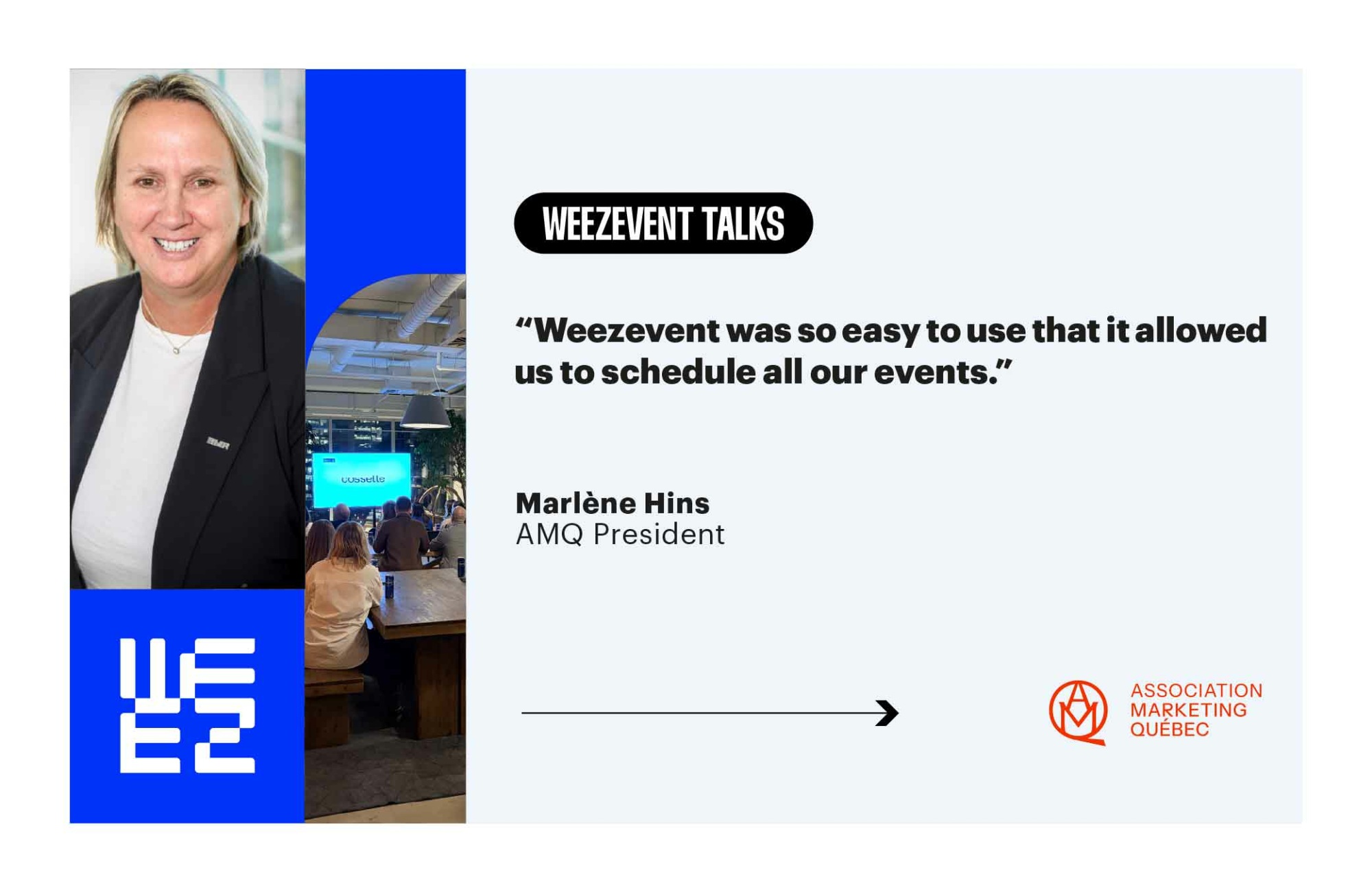
A busy schedule and the desire to grow your network. These are the two challenges that the Association Marketing Québec (AMQ) needs to balance to keep its community engaged. Its answer lies in 2 complementary formats: virtual strategic breakfasts and in-person 5 à 7 events built around talks or panel discussions. One offers convenience, the other creates connections.
The AMQ brings together professionals from brands, agencies, and Quebec’s events industry, creating an ecosystem that spans a wide range of marketing roles. Its mission is to provide them with practical tools and opportunities to meet throughout the year.
In this interview, Marlène, President of the AMQ for the past three years, shares how the association organizes its events and what, in her view, makes the difference between a full room and an empty one.
Summary
1. What event formats can create regular meet-ups that make your community want to come back?
The AMQ relies on 2 formats: virtual strategic breakfasts and in-person 5 à 7 events. The virtual sessions were developed during the pandemic, but the association decided to keep them. For Marlène, their main advantage is simple: they are easy to fit into the schedules of professionals who are already very busy. Travelling into Montreal early in the morning means dealing with transport and parking. Virtual sessions remove these constraints and make it easier to take part.
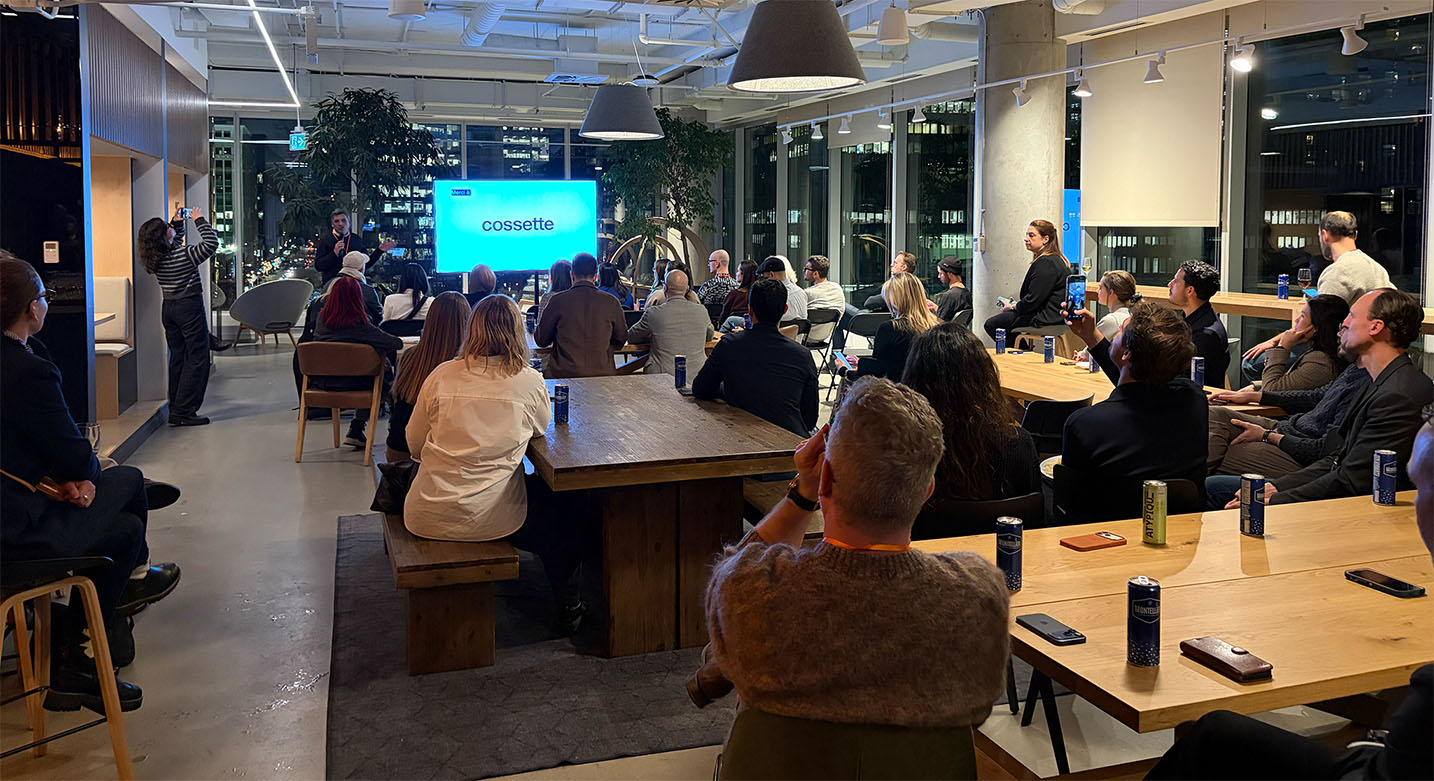
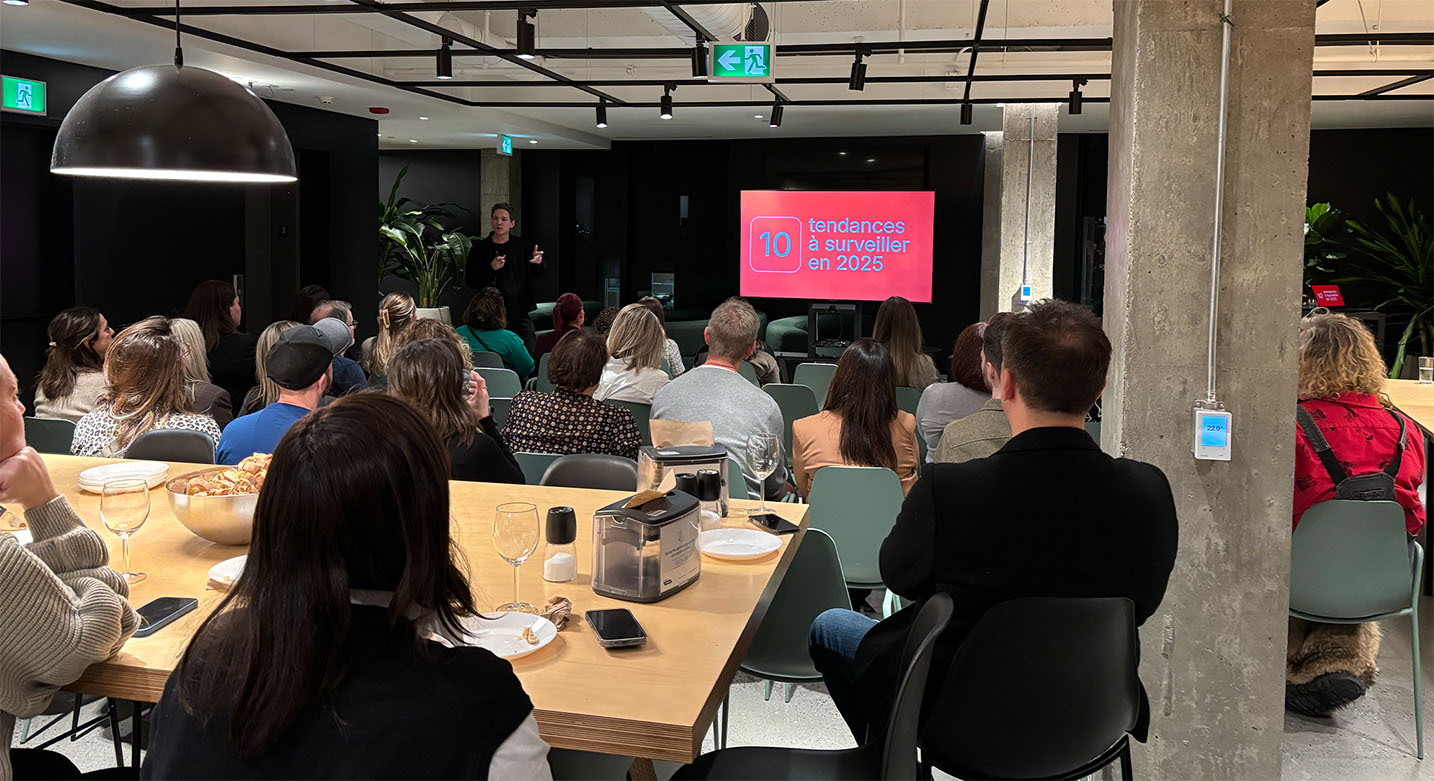
At the same time, the AMQ continues to organize in-person events, generally in the form of conferences or panel discussions.
“People want to see each other and have real conversations.”
These 2 types of events therefore meet different needs: virtual events make content more accessible, while in-person events encourage more interaction and networking. Since autumn 2025, the association has also organized some events alongside other professional organisations in Quebec and Canada. The aim is to broaden their reach and bring several communities together around shared topics. But for Marlène, the format alone is not enough.
“People are very busy, but if you can provide content that is really relevant, you’re going to be successful.”
Regular events only work if the topics remain relevant enough to make attending worthwhile. The AMQ’s role is therefore not only to create a regular meeting point, but also to give people a good reason to attend. Regular events only work if the topics remain relevant enough to make attending worthwhile. The AMQ’s role is therefore not only to create a regular meeting point, but also to give people a good reason to attend.
2. What are the best practices for making events accessible and easy to navigate for the whole community?
For the AMQ, building a community starts with a simple online registration journey, whatever the attendee’s profile. Events are open to the association’s entire community: members can attend as part of their annual membership, while occasional attendees can register for a small fee through various calls to action on the AMQ website, which direct them to a dedicated mini-site.For the AMQ, building a community starts with a simple online registration journey, whatever the attendee’s profile. Events are open to the association’s entire community: members can attend as part of their annual membership, while occasional attendees can register for a small fee through various calls to action on the AMQ website, which direct them to a dedicated mini-site.
“It’s important for things to be simple for users. When your ticketing system isn’t intuitive, it creates friction.”
With this WeezTicket feature, organizers can customize the page to match their brand identity and optimize it for search engines. For recurring events, maintaining a consistent journey from one edition to the next also allows the community to quickly find its bearings.
To make its events visible to as many people as possible, the AMQ uses its own channels as well as its board members, who share events with their own networks, particularly on LinkedIn. Using several touchpoints helps extend the reach of each event, provided the messaging and registration journey remain consistent.
3. For recurring events, what are the best ways to save time?
When several events take place throughout the year, the challenge is to be able to reproduce the same organization without multiplying the number of tasks and tools required for each new event. At the AMQ, this operations are centralized by the association’s coordinator, who is responsible for tasks including event creation and ticketing management. This is where the simplicity of WeezTicket plays an important role for the team.
“It allows us to organize our events really easily.”
Registrations and data are all grouped in one place, and the team can monitor how they develop as the event approaches. This is particularly useful for the AMQ, which finds that a large proportion of attendees book their place during the final few days. If an event is taking place on Wednesday, for example, the team may see on Monday that places are still available and step up its communications to generate more registrations. The ROI of communication activities can therefore be monitored directly from the dashboard.
For virtual strategic breakfasts, the data collected during registration is then used to send practical information to attendees. An invitation containing the meeting link is sent by email, followed by a reminder on the morning of the event to make sure everyone can join easily.
By centralizing registration management and tracking, the AMQ reduces the amount of time spent on logistics for each event. The team can focus more on the heart of its programme: identifying topics that are relevant to its community and bringing together the right speakers.
4. How can registration data help you nurture and engage your community over time?
With each registration, the AMQ collects several pieces of information that help it better understand the professionals attending its events: where they are based, the company they work for and their role within it. However, the aim is not to add as many fields as possible. For Marlène, it is better to focus on the information that is genuinely useful, without making the registration journey unnecessarily long.
Email addresses are naturally part of this. With the attendee’s consent, in accordance with Quebec’s Law 25, they allow the association to continue communicating with them about its events. From one event to the next, the AMQ therefore adds information from new attendees to its databases so that it can stay in touch with them and create targeted marketing campaigns.
The AMQ also monitors the proportion of members and non-members registered for each event. This allows the association to see whether an event is mainly engaging its existing community or also attracting new professionals. It can then adapt its communication as the event approaches based on how registrations are developing.
But registration is only one touchpoint in the relationship with a professional community. Between events, maintaining the engagement of members who are already very busy is a challenge in its own right.
5. Why is it important to structure the attendee welcome process for recurring events?
For its in-person events, the AMQ always sets up a welcome desk for attendees when they arrive. This gives the team an opportunity to welcome professionals before the conference begins and hand out their name badges.
This stage is particularly important for an association that organizes regular events, as the welcome marks the beginning of the time spent together by members, external attendees and the other professionals present. It therefore extends the purpose of the AMQ’s 5 à 7 events, which are designed both to share content and give the community an opportunity to meet and exchange ideas.
However, for events where access control is essential, a solution such as WeezAccess can complement this setup. Tickets can be scanned using the free mobile app: red means the ticket is not valid, while green confirms access.
Building a professional community through regular events therefore depends on the ability to create meet-ups that are accessible, relevant and easy to reproduce over time.
WeezTicket supports this regularity by centralizing event creation, registrations and tracking on a single platform. The team can monitor how bookings are developing, adapt its communications as each event approaches and collect the information it needs to stay in touch with attendees.
Would you like to establish regular events to keep your community engaged? Our ticketing and access control solutions support you from registration right through to welcoming attendees. By simplifying the organization of your events, you can spend more time focusing on what matters most: the quality of your event.
FAQ
Q : How can you build a professional community around regular events?
Pour fédérer durablement une communauté, il faut lui donner des rendez-vous réguliers, des objectifs clairs et surtout une bonne raison de participer. La logique est proche de celle utilisée pour fédérer une équipe autour d’un projet commun : chaque membre doit comprendre l’intérêt du rendez-vous et la valeur qu’il peut en retirer. Pour l’organisateur, l’enjeu consiste donc à proposer des sujets pertinents, à faciliter les échanges et à créer progressivement un sentiment d’appartenance.
Q: How can you bring a team together around recurring events?
To bring a team together, it is important to define everyone’s responsibilities and set clear objectives for each event. A well-coordinated team knows who is preparing the content, who is managing registrations and who is responsible for communications. This allows each team member to contribute towards a shared objective without creating unnecessary tasks.
Centralizing registrations with WeezTicket also allows the team to work from the same information and focus on the event’s shared objectives.
Q: Which event formats work best for bringing a professional community together?
Formats should above all reflect the needs and constraints of the community. Virtual events make participation easier, while conferences, panel discussions and in-person events create more opportunities for conversations and interaction, sometimes in a more informal setting.
As with a team-building activity designed to strengthen team cohesion, the important thing is to choose a format that matches the objective. For the organizing team, alternating between formats provides different ways to take part while continuing to build connections between community members.
Q: What data should you collect to better understand your community?
The team should focus on information that is genuinely useful, such as an attendee’s email address, company, role or location. A form that is too long can create friction and reduce the number of registrations.
This data then allows the team to better understand the people attending, adapt its communications and highlight the contributions of different members. The aim is to learn more about the community without making the attendee journey more complicated.
Q: How can you simplify the organization of regular events for your team?
To bring a team together around regular events, it helps to limit the number of tools being used and make sure everyone can easily find the information they need.
With WeezTicket, the AMQ centralizes registrations and tracking in one place. The manager or person responsible for the event can monitor how bookings are progressing, while every team member retains a clear overview of attendance levels.
This approach also makes it easier to delegate tasks, give each team member responsibility and spend more time focusing on the event content.
Q: How can you communicate effectively around recurring events?
To bring teams together around event promotion, everyone needs to know which messages to share and the key moments for communication. A website, email, social media and promotion by community members can all be used in tandem.
Tracking registrations also allows the team to see whether a particular communication generates bookings and decide when it may be useful to communicate again. Communication is key to maintaining an event’s visibility, but it should remain regular and consistent rather than being limited to the final few days before the event.
Q: How can you measure the success and engagement of a community?
The number of registrations is only one indicator of success. The team can also look at attendance from one event to the next, the proportion of new attendees, the return rate of existing members and the interactions generated between events.
Feedback collected after events can complement this data. It helps the team understand what is working, what isn’t and adjust future events accordingly.
Q: What tools can you use to bring teams and communities together around events?
Several tools can support different stages of bringing professionals together through regular events. WeezTicket allows the team to manage registrations and attendee data, while WeezAccess can complement the setup when entry controls are required.