In 2026, more than 200 concerts were cancelled in France because of heatwaves, fire risk and storms (CNM). That figure excludes shortened days, evacuations, and bars closed by order of the authorities. Other countries across Europe faced similar challenges.
For a festival, the impact of these decisions goes well beyond lost capacity. According to a study on the economics of festivals, two in three festivals already ended their 2024 edition in deficit, including 68% of those that were more than 90% full. Ticketing and bar sales alone account for almost 60% of their revenue. When the event stops, most of the year’s budget often goes with it, and sometimes the chance of a next edition.
At these moments, Weezevent becomes one of the first tools an organizer turns to. Within a few hours, our tools send alerts to tens of thousands of people, apply restrictions that keep the bars open, or offer an alternative to a refund. That only works if everything was prepared in advance.
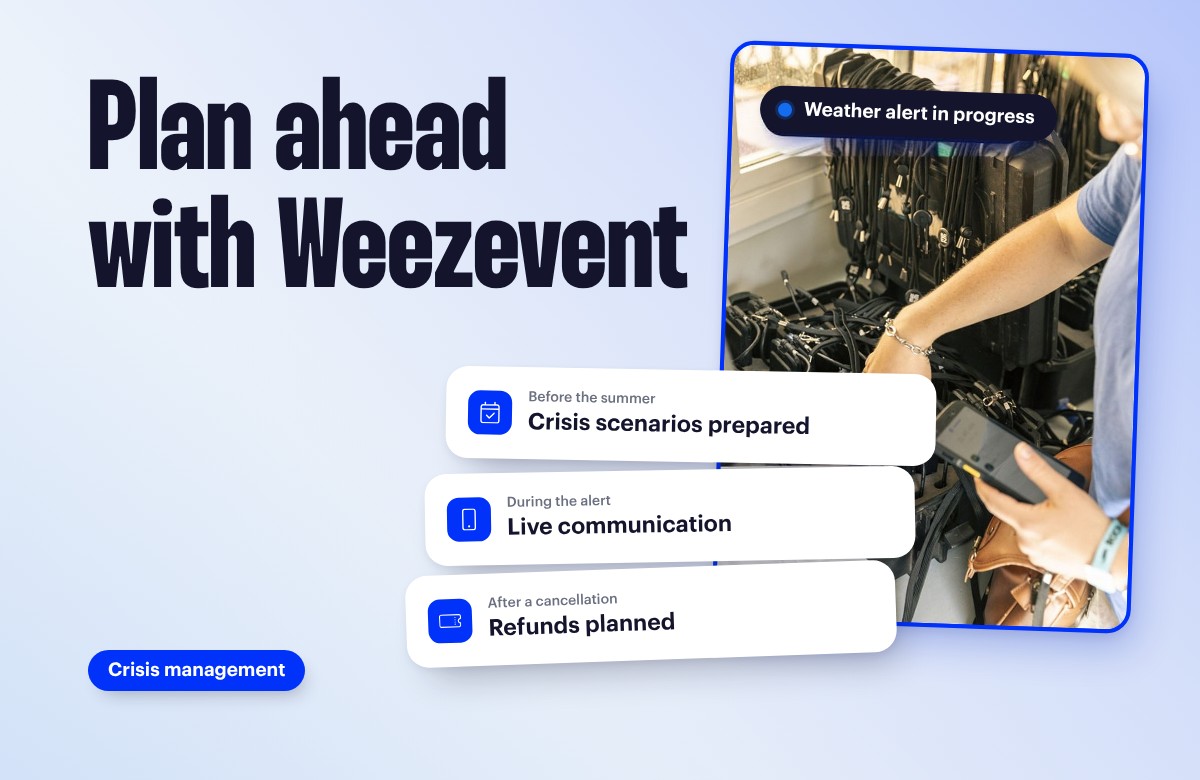
Before, during and after: here’s what an organizer needs to prepare with their technology partner to deal with extreme weather.
Summary
1. Before the summer: decide calmly what you’ll do under pressure
Events are stopped by decisions. Authorities may impose the decision, the organizer may make it, or they may decide together to avoid the worst. This summer, some came two hours before the gates opened. That leaves time to act and little time to think.
So the work happens beforehand, scenario by scenario: full or partial cancellation, shorter hours, postponement, evacuation, adapted sales. For each one, you need to know who to inform, with what message and through which channel, which ticket policy to apply, and what your tools can actually do within your terms and conditions of sale.
This preparation also changes how you approach a crisis. At one festival we supported during a major on-site fire, the team ruled out cancelling from the start: all its energy went into finding a way to still give the audience an event. That takes knowing exactly which options you have!
That’s the purpose of a conversation with your technology partner before the season: go through these scenarios, check what each tool can do and prepare everything you can in advance.
2. During: inform, adapt, keep things running
Inform each audience through the right channel
When the decision comes, you need to inform two audiences, and you reach each one differently.
Attendees. In an emergency, SMS is the most direct channel, but it requires every attendee’s phone number. Email is the most complete channel, since you have every buyer’s address. Push notifications are also useful and instant for those who have installed the event app.
Each person needs their own message: someone camping, someone already on site and someone still on the road need different instructions. Your tools should cover each of these needs.
Teams: staff, volunteers, suppliers… They pass the instructions on across the site. The most effective approach works on two levels: a short SMS to everyone (“The festival is cancelled tonight. Follow your team leader’s instructions.”) and a detailed email to team leaders, with the closing time for stands, the meeting point and what they can and can’t share.
At a festival of 45,000 attendees, torrential rain forced a full site evacuation. The audience was alerted by push notification while teams relayed instructions on site.
All of this needs to be ready before an alert. Contact lists, segments and messages are prepared in advance, so when the moment comes, all that’s left is to send them. When every minute counts, a communication tool connected to your ticketing saves you long, tedious imports and exports.
At Weezevent, Gigz plays this role for attendees and WeezCrew for teams, with segments kept up to date from your ticketing data.
Adapt sales to restrictions
During heatwaves, the authorities can make exceptional measures a condition for letting an event go ahead, starting with limits on alcohol sales. For the organizer, accepting the restriction and applying it straight away keeps the event going and protects part of the bar revenue.
At a festival of 60,000 attendees, spirits were banned from midday, and beer was limited to 25 cl per order across more than 1,500 terminals. A rule like this only works if it applies everywhere, immediately, and can be lifted just as quickly, for example, after 10 pm when the heat drops.
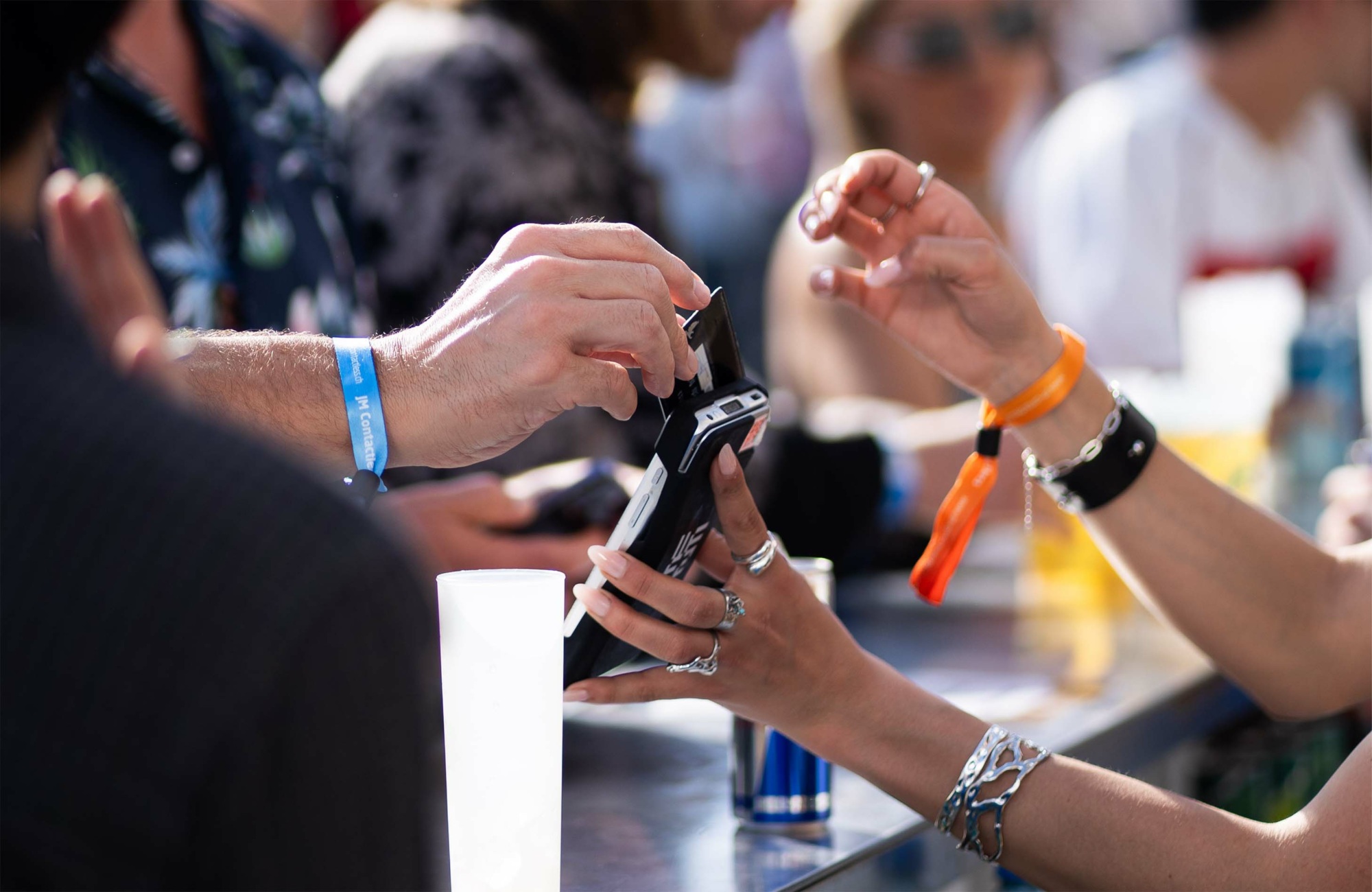
With cashless payment, each attendee pays with an NFC wristband or card. Unlike bank card payments, this system lets you manage these rules from the back office and apply them instantly on every connected terminal:
- Disable a product category (such as alcohol).
- Cap a quantity.
- Lower a price.
- Offer one free item per person (such as water or a fan).
- Everything should be possible!
Good to know: the limit applies to purchases, not consumption, and it gives authorities the guarantee they ask for. That’s what WeezPay does at the events we support.
Keep the service running
A crisis plan only works if the equipment holds up. A faulty terminal means a closed point of sale or a blocked entrance just when the crowd is at its peak. Check these three points with your provider:
- Mobility: mobile terminals can be redeployed in minutes when an area has to close or move, whereas a wired installation locks your set-up in place.
- Durability: against rain, dust and knocks, and against a full day in direct sun. Battery life counts as much: a terminal should last a full shift without a battery change. Cold also tests equipment: our terminals worked at -11 °C during an Alpine Ski World Cup race.
- Offline mode: if the network goes down, sales and access control carry on, then sync when the connection returns
This summer, several festivals went ahead in heavy rain with no terminal disruption. You need this reliability: after an interruption, you can’t afford to restart the whole setup when things resume.
Finally, every decision needs figures. Tickets sold, people on site, campers: this data needs to be available in real time, in one place, for the organizer and the authorities.
3. After: refund without losing your audience
If the event is cancelled, the question of refunds comes up immediately. Attendees have a right to a refund, and you still have choices in how you organize it. Those choices weigh heavily for an organization that earns most of its revenue in a few days. Your relationship with your audience, how many editions have already been disrupted, and the nature of the incident help you decide. Your ticketing then needs to apply that decision precisely, in line with your terms and conditions of sale and the law:
- Automatic refunds, in a single operation, with nothing for the attendee to do.
- Partial refunds, in proportion to the cancelled part, for example, one day of a multi-day pass.
- Refunds on request: when confirming, each attendee can leave all or part of the amount to the event. Your audience can support the festival this way, in exchange for a longer wait and a step on their part.
Other options help you keep your audience close:
- A credit or code valid for the next edition.
- An exchange for another date or another event of yours.
- For a postponement, a ticket that stays valid with no action needed, and secure resale for those who can’t make the new date.
- After an evacuation, readmission: tickets reset, and the audience returns with the same ticket.
These options need to be ready to switch on the day of the cancellation. This is often where the chance of a next edition is decided.
4. Behind the tools, people
Extreme weather rarely hits just one event. A heatwave affects a whole region, sometimes a whole country, and every organizer calls on their providers at the same time. A partner’s strength then shows in its ability to respond to each of them.
That ability comes from people: on-site project managers used to redeploying a setup in minutes, product and technical teams on call, support available 24/7, and finance and customer service teams who can handle requests when a cancellation affects 10,000, 50,000, or 100,000 people.
At Weezevent, this experience comes from more than 10 years of cashless payments and 800 on-site deployments every year.
5. What Weezevent brings you
- Inform attendees and teams with targeted communications.
- Manage refunds and offer alternatives to protect your finances.
- Adjust sales in real time by changing prices or applying restrictions at points of sale.
- Keep operations running, even in difficult weather or during a network outage.
- Get responsive support, with customer service available 24/7 for technical emergencies.
Working with another provider? Go through all these points with them to prepare your next edition.
The summers ahead will probably be just as hot. Organizers who have prepared these responses will still face some cancellations, but they’ll have the means to limit costs for their audience and protect the future of their event.