Early bird tickets are one of the most reliable ways to get a sale moving. A limited batch of discounted tickets, released before the full programme is announced, rewards your most committed fans and brings in revenue early. On their own, they work well. As part of a planned sequence that starts before the sale even opens, they work far better.
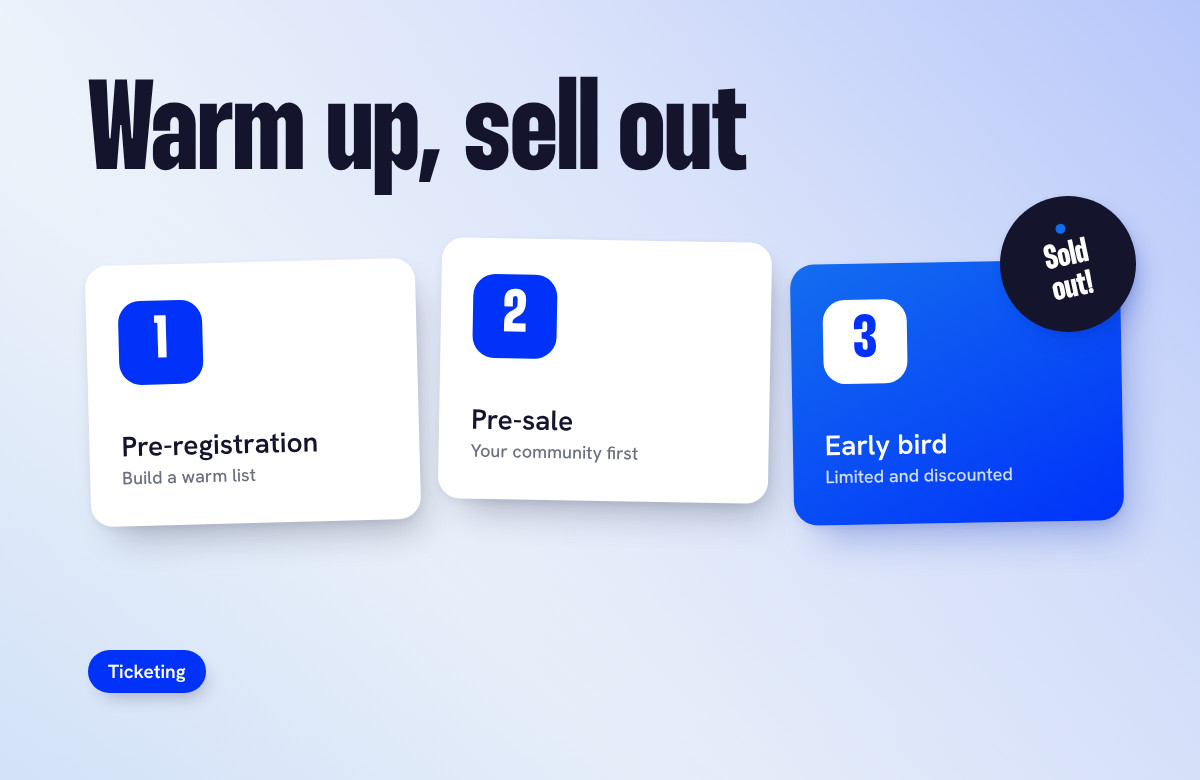
That sequence runs from pre-registration, through an exclusive pre-sale, into your early bird window and on through your general tiers. Each stage warms your audience, grows the data you hold on them, and makes the next stage easier. This guide walks through the whole process and shows how to use each phase to build momentum for your ticket sales.
Summary
Start before the sale: pre-registration
The strongest sales rarely begin when the tickets go live. They begin weeks earlier, with pre-registration. A pre-registration form lets interested people sign up before anything is on sale, so you build a list of warm, opted-in contacts to launch to, rather than starting cold on the day.
Pre-registration does three things at once. It builds anticipation, tells you who your audience actually is, and shows you how much demand exists before you commit to pricing, capacity, or a second date. You learn where your audience is based, which dates or sessions suit them, and which parts of your programme they respond to, all of which sharpens the campaign to come.
Around 90% of ticket sales come through an organizer’s own channels, such as your website, email list and social media, rather than through any marketplace. A cold launch to a thin list means a slower first hour and a higher cost per sale. A warm list of pre-registrants converts faster and more cheaply than almost anything you can buy. With Weezevent, you can build a pre-registration page or embed a sign-up form on your website in minutes, and encourage sign-ups by offering early access to the first tickets.
Reward your core community with a pre-sale
Once you have a warm list, you can start gaining traction with a pre-sale. A pre-sale gives your core community, your past attendees, members, newsletter subscribers and partners exclusive first access before the general public. It rewards loyalty, and it creates a genuine sense of urgency and privilege that a public on-sale cannot. In practice, you reserve the pre-sale for this group with an access code or a private link, so only your pre-registrants can buy during the window.
Price your pre-sale below your early bird to recognize the people who commit earliest. Keep the window short, usually up to a week, so it stays exclusive and feeds momentum into the phases that follow. Everyone who pre-registered is the natural audience for this step, which is exactly why the two work so well in sequence.
Launch the public window with early bird tickets
Once you’ve served your community, you can use early birds to open a window to a wider audience. Early bird tickets are a limited batch of discounted tickets, often 20 to 50% below the final price, released for a set period or until a set quantity sells out. They reward people who commit before the full line-up is confirmed.
What you get in return is:
- Early revenue and proof of demand, which helps you make decisions on capacity, a second date or a further release with real numbers in front of you.
- Smoother operations later, with fewer last-minute sales.
- A group of ambassadors, since early buyers tell their friends and build word of mouth well ahead of your main push.
The effect on the wider campaign is significant. Selling 30 to 40% of your tickets early makes the rest of the campaign far easier to run, and events that release around 20% of their tickets as early birds tend to have a higher chance of selling out. Give the window a clear end date or a fixed quantity, state those conditions plainly in your marketing and terms, and consider a super early bird tier for the very first buyers.
Build your tiers and sales phases
Early birds should only be one part of a larger plan. The most effective approach combines a phased release with clear price tiers, creating urgency at each step while building momentum over time. A simple, proven strategy follows this structure: Early Bird, then Regular, then a final higher-priced tier for last-minute buyers, with each tier matched to how different people buy.
Using Weezevent, you can assign each ticket pricing tier its own quota and on-sale dates, and it will automatically switch to the next tier the moment a quota sells out or a date passes, so the progression runs without you having to change anything by hand.
Set a realistic floor for your pricing by dividing your total event cost by the number of attendees you expect, then build your tiers up from there and explain the benefit of each one clearly. Timing helps too: midweek launches on a Monday or Wednesday, going live between 10:00 and 12:00 or 17:00 and 19:00, tend to perform best, since those are the windows when people check their phones and plan their social lives. If you launch on a Friday, be ready to keep the energy up across the weekend.
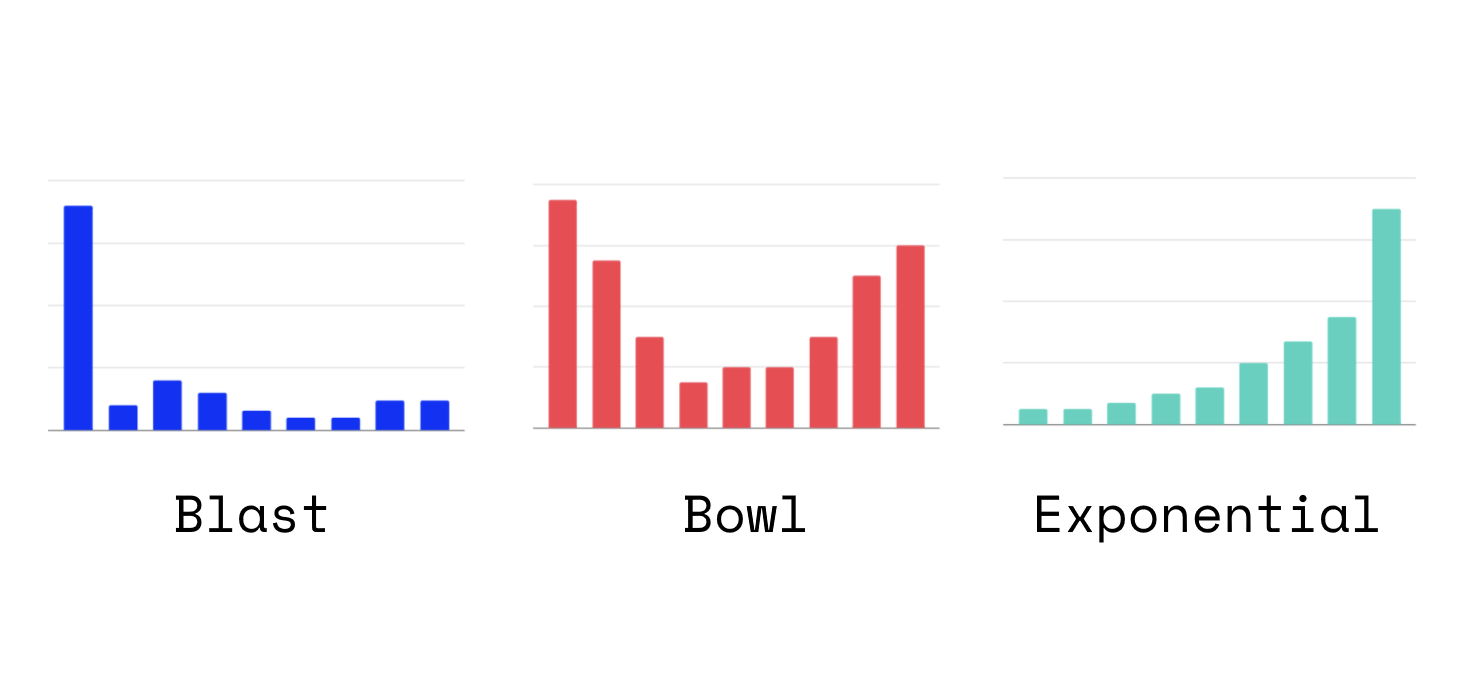
It is also worth knowing the shape your sales are likely to take. Most festivals follow a “bowl” pattern, with a peak at launch and another as the event nears. A strong pre-registered audience and a good launch can shift you toward a “blast”, where most tickets sell up front. The pattern to avoid is sales staying flat until the final weeks, because it leaves you no time to adjust.
Where you expect a genuine surge at launch, a virtual queue can absorb that peak by holding buyers in an orderly queue and releasing them to checkout in a steady flow. This helps keep your ticket launch day smooth and prevents your page from being overwhelmed.
Own the data every phase generates
Each stage of this sequence produces something as valuable as the revenue: data. Pre-registrations, pre-sales and early bird purchases all tell you who your audience is, where they are, which dates and tiers they chose, and how they responded to each push. With Weezevent, that data belongs to you. You can access, export, and act on it, and we never use or sell it.
Put it to work. Segment your audience by behaviour, location and history, and target your marketing accordingly, with local campaigns where you see regional clusters and tailored messaging around the genres or activities that resonate.
A built-in CRM such as Gigz lets you send targeted emails to the right groups, not the same message to everyone. With ready-made segmentation of your pre-registrants, automated campaigns that trigger as people move through each phase, and attribution that shows which messages actually drove sales. The better you understand each phase, the more precisely you can run the next one.
Close the loop for next time
The end of one sale is the start of the next. Your audience is warmest the moment your event finishes, so it is the ideal time to begin again.
Capture that goodwill while it lasts. Open pre-registration for the next edition straight after the event, convert the traffic still coming to your site into sign-ups, and you begin the whole sequence again with a qualified audience already in hand. Your richest source of insight for the next edition is the event you’ve just run; see our guide to making the most of your post-event attendee data.
If you run a closed-loop cashless event, the refund step is another opportunity: when attendees go to reclaim their leftover balance, you can offer them a ticket or voucher toward next year’s edition at the exact moment they feel most attached to the experience. You can also sell next year’s early birds on-site, rewarding buyers with priority access or extras.
Weezevent brings pre-registration, ticketing, cashless and your audience data together in one place, so each phase of your sale feeds the next. Find out more about online registration and ticketing with Weezevent.