For many medium-sized event organisers, cashless still feels like something reserved for another world. A world of massive festivals, large technical teams and budgets that allow for experimentation. When you organise an event for 3,000 to 10,000 people, priorities are very different.
What matters most is keeping things under control on site: making sure bars can cope during peak moments, avoiding unnecessary stress for staff and volunteers, and protecting margins in an environment where every decision counts.
Cashless is a practical tool that responds directly to those realities, making operations calmer, clearer, and more predictable without requiring the event to grow bigger or more complex. For many organisers, the focus is centred on creating an event that runs smoothly from start to finish.
More medium-sized events are now choosing cashless to simplify operations, not to change the fundamental nature of their event.
Summary
Where smaller events feel pressure first
Every edition brings the same concerns. Will the bars cope when everyone arrives at once? What happens if the network becomes unstable? How do you avoid long queues without adding more staff or stretching volunteers beyond their limits? And once the event is over, how do you really know what worked and what did not?
For medium-sized events, these questions are not theoretical. Peak moments are intense and short. Teams are often lean. Sites are temporary and there is little room for error when pressure builds quickly.
Most of these challenges come down to control at the moments that matter most. How payments behave during peak hours, how resilient the on-site setup is, and how much clarity organisers have once the event is over all play a role. Cashless directly addresses these points, as the following sections will show.
Use cashless to ease on-site operations
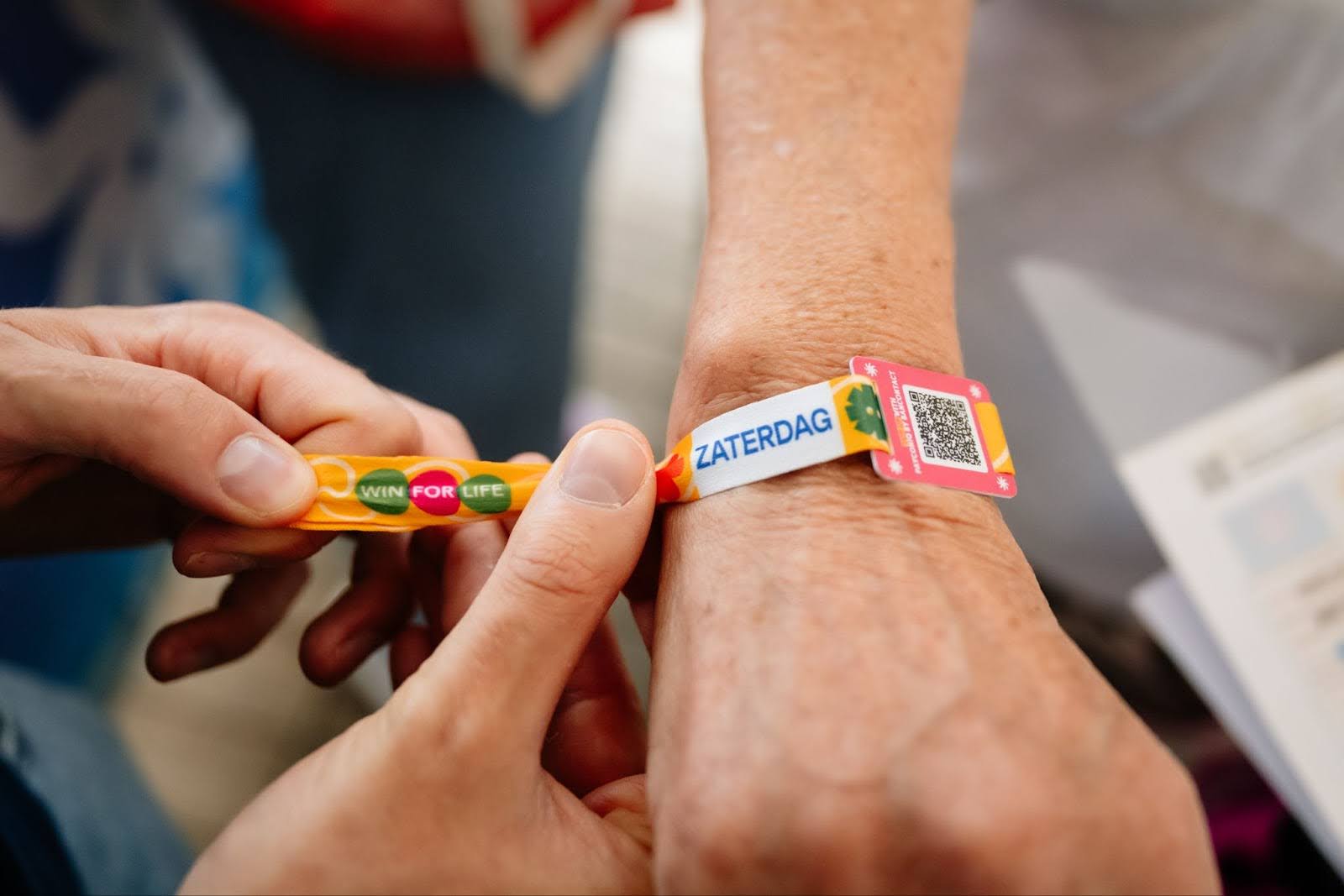
Cashless does not change how visitors experience an event. It simplifies how payments happen on-site. Visitors receive a wristband or an NFC card and load credit when needed. This can be done at a top-up point or by scanning a QR code linked to their wristband or card.
In practice, topping up takes less than 20 seconds. Most visitors do it once or twice, often at natural moments such as on arrival, between concerts, or while queuing at the bar. Because these actions fit into the event’s rhythm, pressure on top-up points stays low.
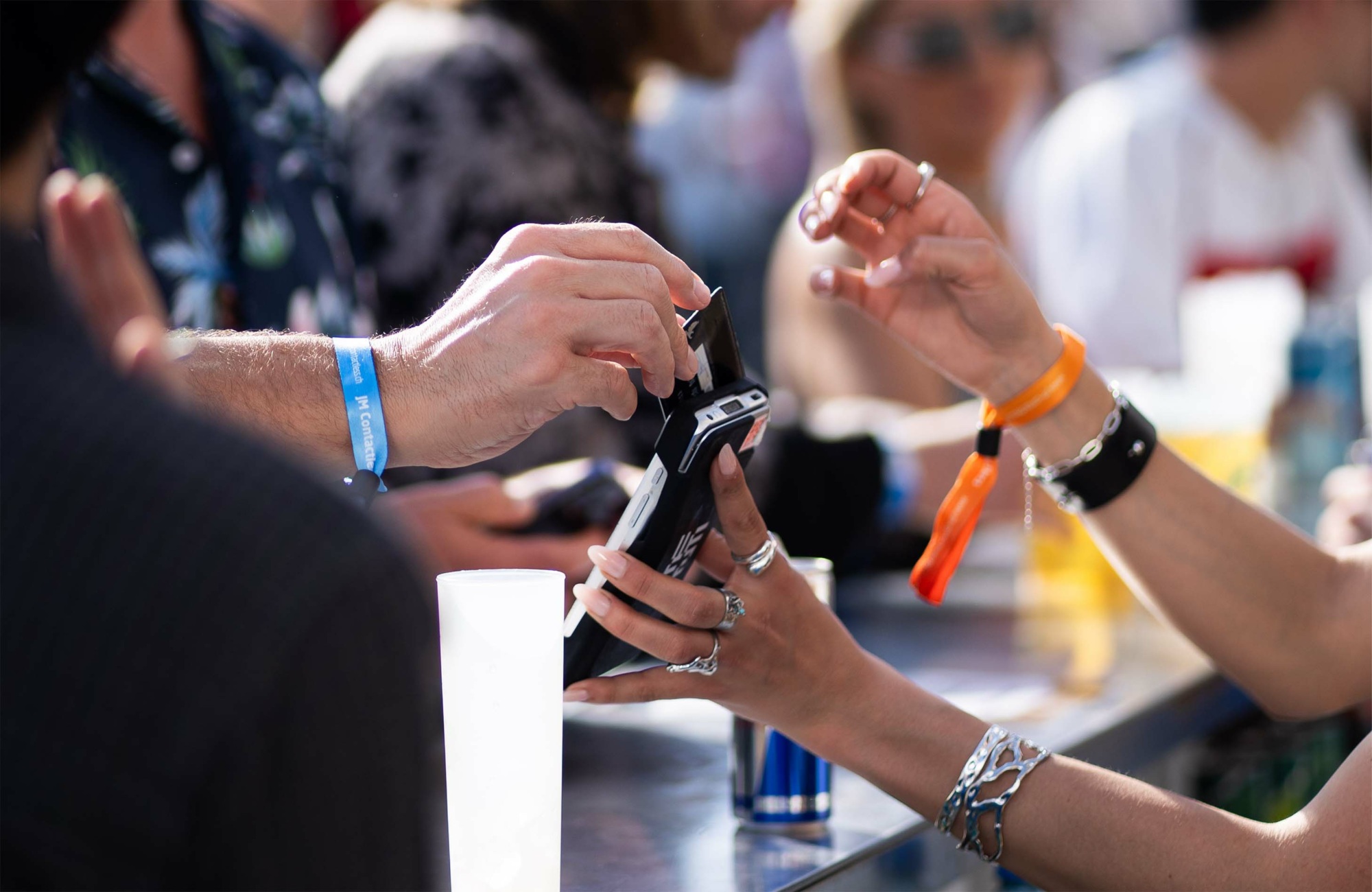
At the bar, payments are reduced to a single tap. There is no cash handling, no card confirmation, and no interruption in the flow. Staff can focus on serving rather than processing transactions. As a result, service speeds up, and queues shorten, especially during peak moments.
For organisers, this is often where cashless makes sense: as a practical way to keep operations moving during peak demand, rather than merely a technological upgrade.
Understand how cashless works in practice with ”The cashless guide for event organisers”
Keep payments running, even without a stable network
Medium-sized events rarely take place in ideal conditions. Sites are temporary and connectivity can be unstable. Peak moments are intense and short, leaving little room to react when something slows down.
Cashless systems used at events are designed with this reality in mind. Weezevent’s cashless devices can operate offline, which means payments continue even when the network is unavailable. There is no dependency on constant bank authorisation. Bars keep serving, revenue keeps flowing, and there is no interruption to operations when connectivity drops.
This reliability allows teams to stay focused on the event itself, rather than on resolving issues behind the scenes. For organisers, this removes a major source of stress.
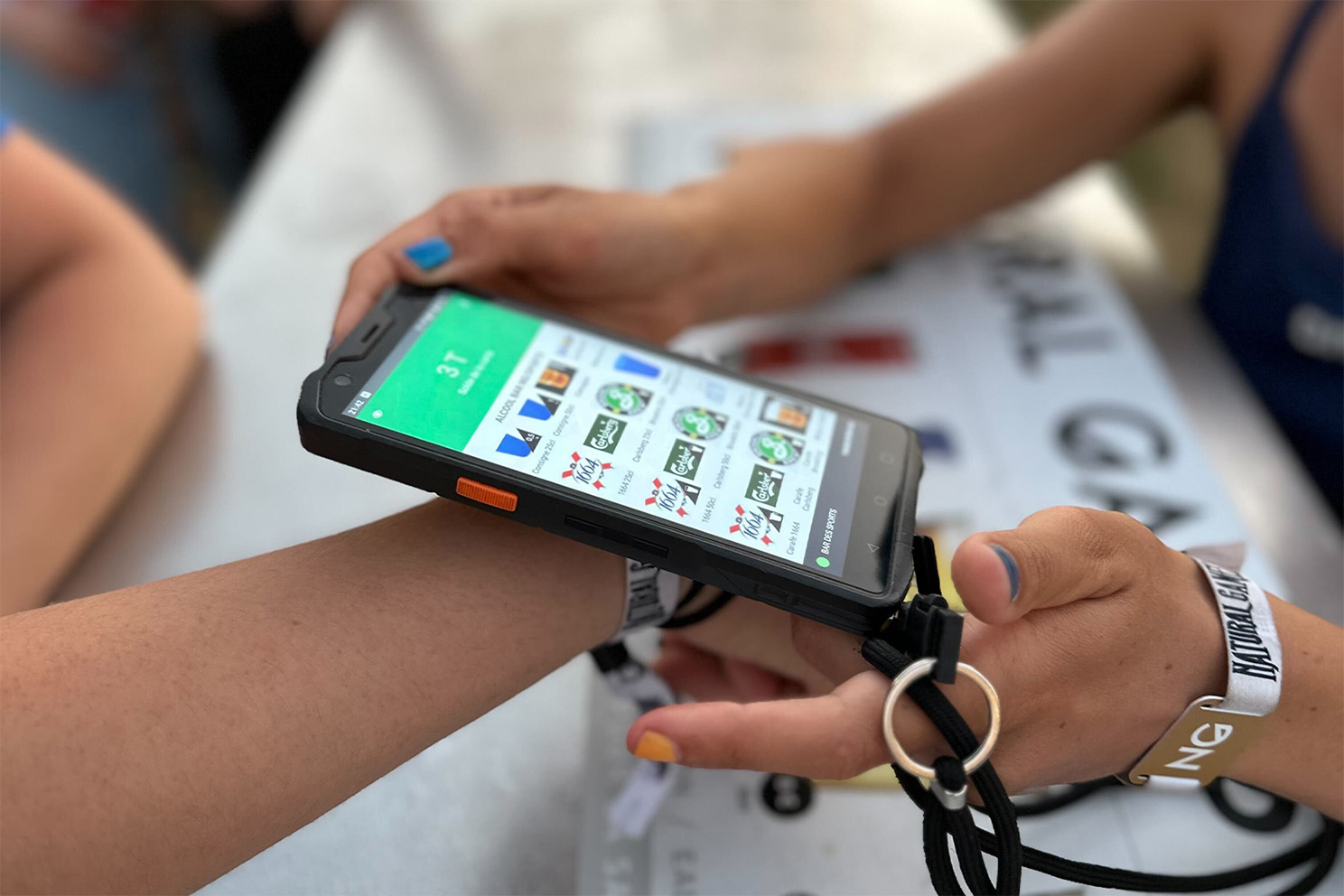
Generate revenue before, during and after the event
Cashless changes how revenue is collected and managed around an event, mainly by making payment flows more predictable.
When visitors load credit in advance, transactions on site happen faster and more consistently. This helps stabilise sales during peak moments and reduces friction at bars and points of sale. As a result, overall turnover is easier to anticipate and manage throughout the event.
Cashless also provides clearer visibility on balances linked to wristbands or NFC cards. At the end of the event, some unused credit may remain, depending on the organiser’s refund policy. These amounts are handled transparently and reflected clearly in post-event reporting, allowing organisers to account for them correctly when reviewing the event’s financial outcome.
Another important aspect is timing. With the option to top up before the event, part of the revenue is collected in advance. This improves cash flow planning and gives organisers more flexibility when covering upfront costs such as suppliers, staffing, and logistics.
Together, these elements contribute to a more controlled financial picture, without changing pricing, pushing sales, or altering the visitor experience.
Improve faster from one edition to the next
After the event, our WeezPay dashboard provides a clear overview of what happened on site. Sales data shows when pressure peaked, which bars performed best, and how visitor flows evolved throughout the day.
This makes it easier to adjust bar locations, staffing levels, and restocking schedules for the next edition, allowing organisers to make decisions based on real data rather than assumptions.
For medium-sized events, this leads to steady improvement. Each edition becomes easier to manage and better aligned with how the event actually runs.
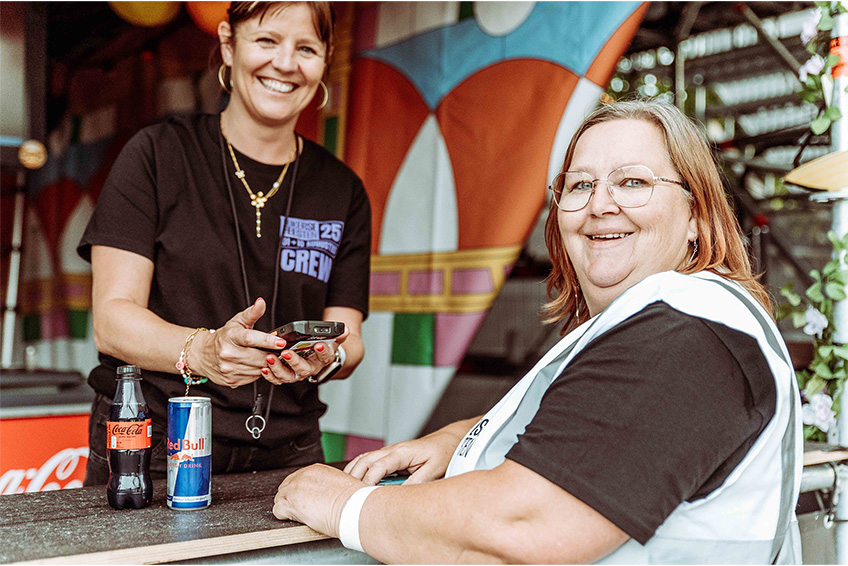
See how it worked at a real event last summer
This perspective comes directly from an interview with the organiser of Rock Affligem, a festival welcoming around 7,000 attendees.
For the organiser, the decision to combine cashless payments with ticketing and access control was driven by operational needs. Paper vouchers and cash handling were removed, which reduced the risk of errors, fraud, and loss. The setup also required fewer volunteers on site, making coordination easier during peak moments.
According to the organiser, the impact was clear once the event started. Bar service became faster, queues shortened, and pressure on staff decreased. Visitors adopted the system naturally, with quick payments and regular top-ups allowing the event to continue without interruption.
After the event, the data collected through the cashless system is reviewed to prepare future editions. Staffing, bar placement, and on-site flows are adjusted based on what actually happened, rather than assumptions.
“Since we started working with Weezevent, we see the quality of our festival improve every year. It builds trust with new partners and even helps us sell tickets faster.”
The same operational logic applies at much larger events such as Tomorrowland, Rock Werchter and Graspop Metal Meeting. Different scales, but the same principles.
For medium-sized events, cashless is a practical foundation that delivers calmer operations, stronger on-site control, and clearer post-event outcomes: not added complexity. Our cashless system is about giving you confidence:
- Confidence that bars will cope during peak moments.
- Confidence that payments will continue even if connectivity drops.
- Confidence that each edition can be prepared with better insight than the last.
Discover how cashless can support your next edition.
FAQ
Is cashless payment suitable for medium-sized events of around 3,500 attendees?
Yes. Cashless payment systems are well suited for medium-scale events with around 3,500 attendees. For organisers at this scale, cashless helps reduce queues, speed up bar service, limit cash handling and maintain clear financial control on site. Cashless for medium-scale events improves operational comfort without requiring heavy infrastructure or large technical teams.
Is cashless also relevant for medium-sized events with 3,500 to 10,000 attendees?
Absolutely. Cashless payment solutions are particularly effective for medium-sized events welcoming between 3,500 and 10,000 attendees. At this scale, peak moments become more intense and margins tighter. Cashless payments help manage higher volumes, protect revenue during busy periods, and ensure consistent service quality across bars and food stands.
How does a cashless payment system work at medium-sized events?
At medium-sized events, visitors receive an NFC wristband or NFC card that serves as their cashless payment method. They can top up their balance on site or online via a QR code linked to their wristband or card. Payments are completed with one tap, making transactions faster and more reliable during peak hours.
What happens if the network is limited or unstable on site?
Cashless payment systems are designed to keep working even when the network is unstable. Transactions are stored locally on payment terminals and synchronised once connectivity is restored. This allows bars to continue selling without interruption and ensures revenue remains secure, regardless of network conditions.
Do visitors accept cashless payments at medium-sized events?
Yes. Visitors at medium-sized events quickly adopt cashless payments because of the speed and ease of use. Shorter queues, faster service and simple top-up options via QR codes make the system intuitive. Most attendees top up once or twice during the event, without needing an app or account.
Is cashless payment cost-effective for medium-sized events?
For medium-sized events, cashless payments often generate a clear return on investment. Faster service increases throughput, average spend per visitor rises, and unspent balances contribute to additional revenue. Combined with reduced cash handling and improved reporting, cashless payment systems help medium-sized organisers strengthen financial control.
Can cashless payments be integrated with ticketing and access control?
Yes. Cashless payments can be combined with ticketing systems and access control at both medium-sized events. Tickets can be linked to NFC wristbands or cards at entry, allowing organisers to manage access rights, restricted zones and lost wristbands from a single platform.
How does cashless help organisers improve future editions?
After the event, cashless reporting provides clear insights into sales performance, peak moments and visitor behaviour. For medium-sized event organisers, this data supports smarter decisions around staffing, bar layout and stock management, helping each edition run more smoothly than the last.